

I ran out of D batteries on night two of a four-night trip last July. It was 9 p.m., I had 11 miles to the nearest store, and my kids wanted to play cards. That was the last time I used a battery-powered camp lantern. I picked up the Lepro 1000LM rechargeable camping lantern the week after and have not looked back through three seasons since.
If you are still feeding D batteries into a lantern every trip, here are the ten things I noticed after making the switch. These are not theoretical benefits. They are the specific moments where the rechargeable version did something the battery lantern could not.
Done throwing money at D batteries? The Lepro rechargeable lantern costs less than two packs of D cells.
1,000 lumens, four light modes, a 4,400mAh internal battery, and a USB-C port so you can top it off from a car charger, power bank, or solar panel. Rated 4.6 stars by more than 33,000 buyers.
Amazon Check Today's Price on Amazon →You Never Get Stranded in the Dark Mid-Trip
Battery-powered lanterns die when the batteries die, and they always seem to die at the worst moment. The Lepro has a 4,400mAh built-in battery that shows you its remaining charge on an LED indicator before you leave the tent. You can top it off during the day from a car adapter or power bank and go into the night knowing exactly what you have. I check it every morning now the same way I check my phone. No more digging through the gear bag for a battery stash that was not there to begin with.
You Stop Paying for Batteries Every Single Trip
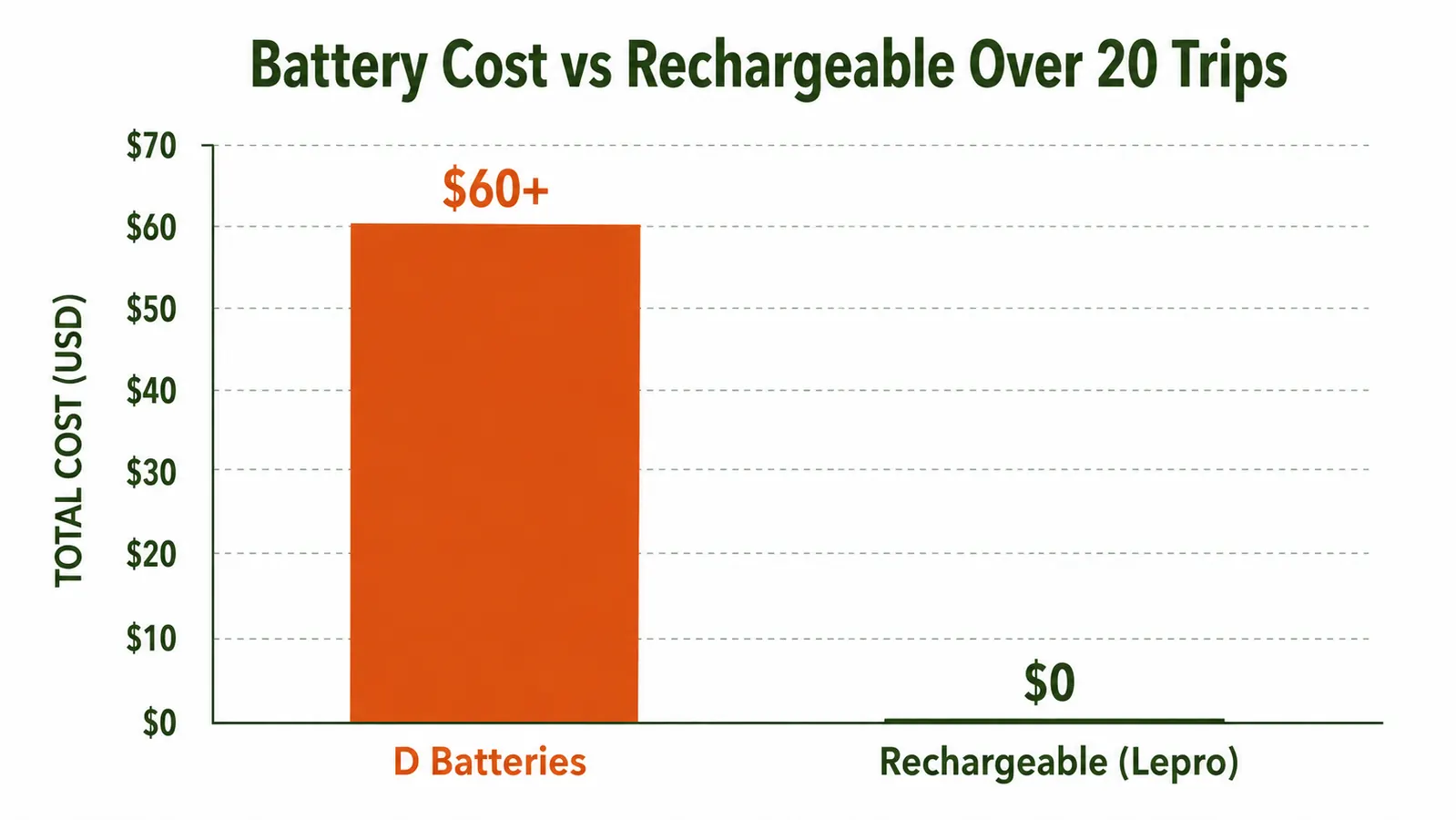
A four-pack of quality D batteries is moderately priced. A typical camp lantern burns through a set every two nights under normal use. Over a season of eight weekend trips, that is a significant battery expense, not counting the lantern itself. The Lepro charges via USB-C and uses a built-in lithium cell with a rated lifespan of 500-plus charge cycles. Do the math over two seasons and the rechargeable version pays for itself compared to the ongoing battery bill.
One Less Thing to Pack and Forget
When you run a battery lantern you carry the lantern, a spare set of batteries, and a nagging worry that the spare set is the same dead ones you pulled out last month. With the Lepro I just grab the lantern and its USB-C cable. That is it. Lighter pack, less to forget, and nothing to buy at a gas station convenience store en route to the site.
Four Brightness Modes Let You Match Light to the Situation
The Lepro has high (1,000 lumens), medium, low, and a warm-color night mode. High is bright enough to light a picnic table for cooking and card games. Night mode is soft enough that it does not wreck anyone's eyes when they walk out of the tent at 2 a.m. I use medium most evenings to stretch battery life, and switch to high only when I actually need to find something in the gear pile. Battery lanterns usually have one or two settings and that is it.
You Can Charge It From Almost Anything
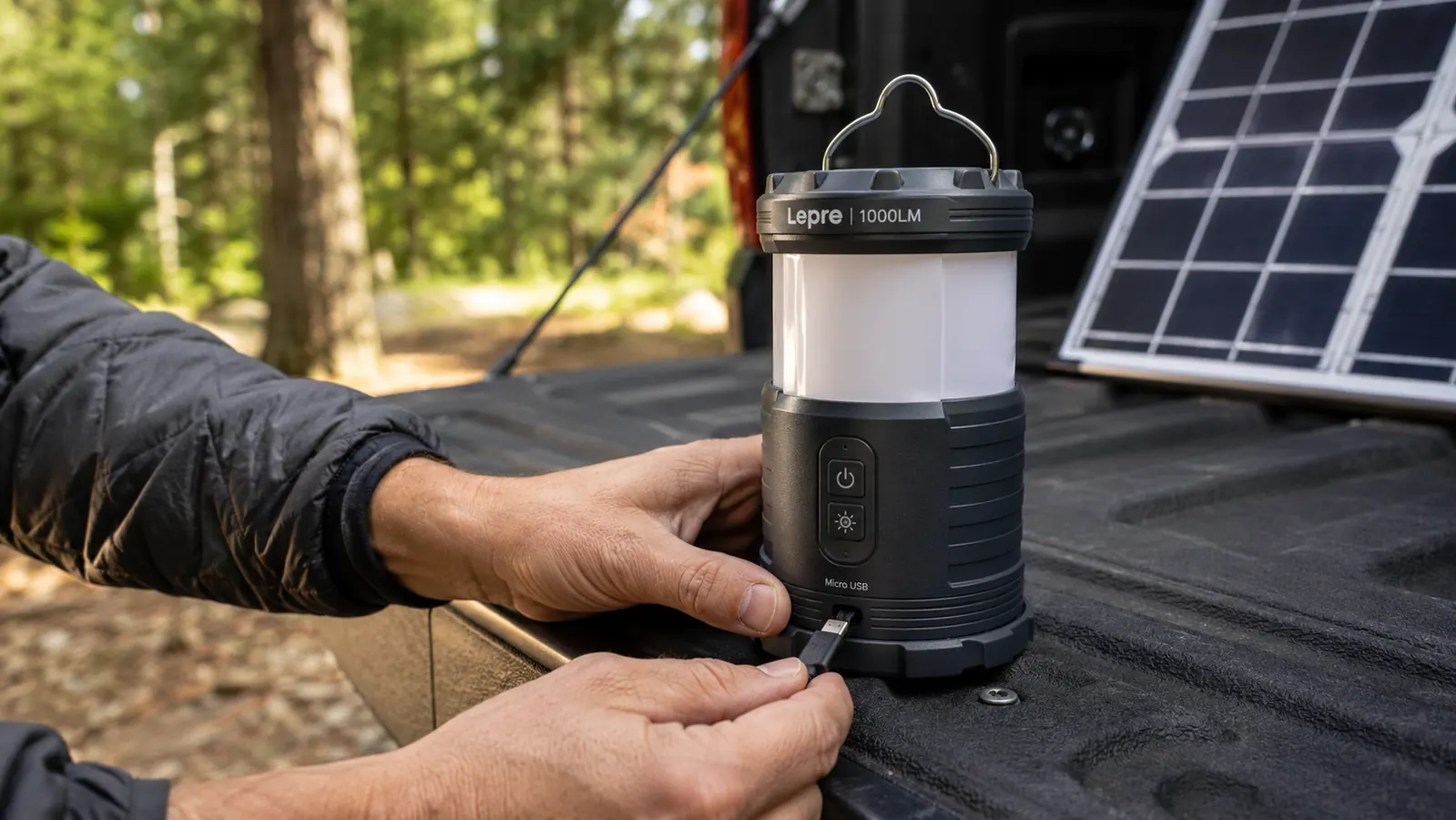
USB-C input means the Lepro charges from a car adapter, a laptop, a power bank, or a solar panel. On longer trips I set it on top of the cooler next to our small folding solar panel during the day. By dinner it is back to full. If you pair it with a portable power station you effectively have unlimited runtime for the whole weekend. Compare that to battery power, where your only option when the cells die is to drive to a store. For more on building a complete no-battery lighting setup, see our guide on how to light your campsite without burning through batteries.
LED Output Does Not Fade as the Battery Drains
This is one I did not think about until I noticed it with the old lantern. Alkaline batteries lose voltage as they drain, so a battery lantern dims gradually over the course of a night. LED lanterns on lithium cells maintain consistent output right up until they shut off. With the Lepro the light is just as bright at hour eight as it was at hour one. That matters when you are cooking, reading a map, or doing anything that actually requires decent visibility.
Rated IP44 So Light Rain Is Not a Problem
The Lepro carries an IP44 weather resistance rating. That means it handles splashes, light rain, and the general damp conditions that come with cooking at an outdoor picnic table. I have left it out in a brief drizzle without any issues. Battery-compartment lanterns can be trickier when moisture gets in around the contacts. The sealed rechargeable design removes that failure point entirely.

It Is Lighter and More Compact Than Comparable Battery Lanterns
Four D batteries weigh a lot. The Lepro with its internal 4,400mAh cell weighs less than most battery lanterns at full load, and the form factor is compact enough to slip into a side pocket of a mid-size pack. I take mine on weekend backpacking trips now, not just car camping. If weight and pack space matter to you, the rechargeable wins every time over a lantern carrying a fistful of heavy alkalines.
Over 33,000 Buyers Back It Up
The Lepro has more than 33,000 Amazon reviews and a 4.6-star average. That is not a marketing number. That is tens of thousands of campers who have run this lantern through real conditions and came back to write about it. Common feedback in the reviews matches what I have experienced: the battery life is accurate, the brightness is legit, and the build quality holds up past the first season. For a deeper look at how it performs over time, check our full season review of the Lepro lantern.
You Do Not Have to Think About It Anymore
This is the real one. When the lantern lives on the charger between trips you show up to the campsite with a full battery every single time. No pre-trip battery run to the hardware store. No mid-trip battery check. No anxiety about whether the light will last through the night. Charge it before you leave, toss it in the bag, done. That mental overhead sounds small until you realize how much of your camping prep was just managing battery logistics.
What I'd Skip
The Lepro is not perfect. If you need a lantern that can run for a week on a remote expedition without any charging option, lithium disposables still win on raw energy density. And if you already have a battery lantern that works fine and a drawer full of D cells, there is no reason to replace it mid-season. The switch makes the most sense when you are buying a new lantern or replacing one that finally died. At that point there is no good reason to buy a battery-powered model again.
Charge it before you leave, toss it in the bag, done. That is the real argument for rechargeable. It removes an entire category of things to remember and buy.
If you are buying a new lantern this season, make it a rechargeable one.
The Lepro 1000LM is the one I keep reaching for. Bright enough for a full campsite, light enough to backpack with, and charges from the same USB-C cable your phone uses. More than 33,000 campers agree it holds up.
Amazon Check Today's Price on Amazon →