
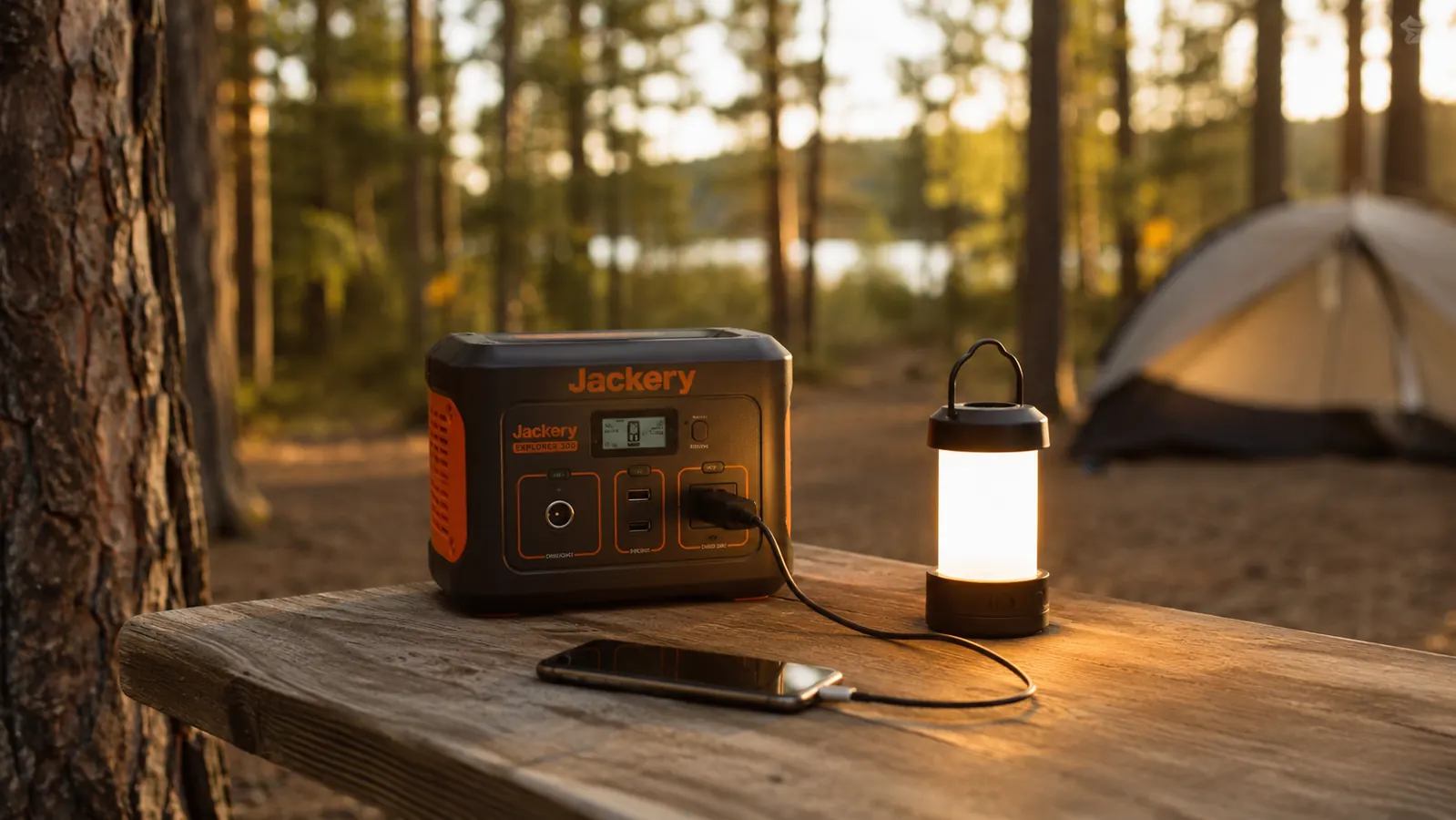
Here is the short answer: if you camp most weekends, run a fan or CPAP at night, and want a power station you can trust to still be working three years from now, buy the Jackery Explorer 300. If you need to fully recharge in under two hours between back-to-back camping days, the EcoFlow River 2 is worth a look. For everyone else, the Jackery wins on reliability, price stability, and a track record that spans years of real-world use.
I have been running the Jackery Explorer 300 on weekend trips since early 2024. About six months in I borrowed a friend's EcoFlow River 2 for a comparison weekend at Pisgah National Forest in North Carolina. Same campsite, same devices, same conditions. The differences were smaller than I expected in some areas and bigger in others.
| Jackery Explorer 300 | EcoFlow River 2 | |
|---|---|---|
| Capacity | 292Wh (LiFePO4) | 256Wh (LiFePO4) |
| AC Output | 300W (600W surge) | 300W (600W surge) |
| Weight | 7.1 lbs | 7.7 lbs |
| Wall Recharge Time | ~5.5 hours | ~60 minutes (X-Stream) |
| USB-C PD Output | 18W | 60W |
| Number of Ports | 6 (2 AC, 2 USB-A, 1 USB-C, 1 car) | 6 (2 AC, 2 USB-A, 1 USB-C, 1 car) |
| Battery Cycle Life | 500+ cycles | 800+ cycles |
| Display | LED battery indicator + wattage | LCD screen with precise % and time remaining |
| Brand Track Record | 9+ years, massive support community | 4 years, growing fast |
Where the Jackery Explorer 300 Wins
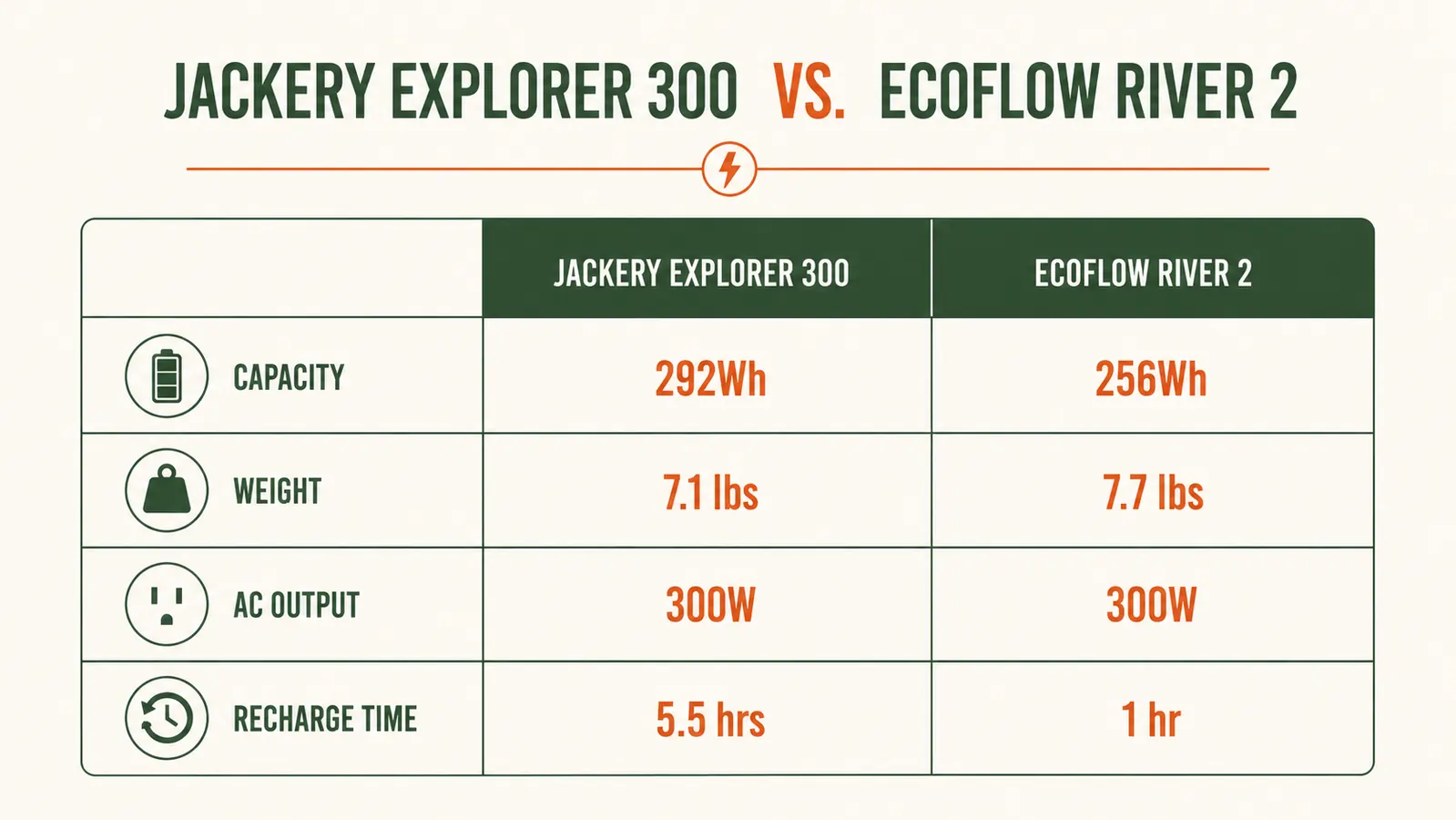
Capacity is the number that matters most when you are deciding how many nights you can go without a recharge. The Jackery carries 292Wh compared to the River 2's 256Wh. That gap is roughly one extra night of running a small fan on low. On a three-day weekend trip where I could not recharge on Saturday, that difference let me keep the fan going through Sunday morning without worrying about whether I had enough left to charge phones for the drive home.
The bigger win for Jackery is the combination of weight and proven track record. At 7.1 pounds versus the River 2's 7.7 pounds, neither unit is heavy, but the Jackery slides into a pack side pocket without shifting your balance on a short hike in. More importantly, Jackery has been making portable power stations since 2016. The Explorer 300 has had years of firmware updates, there is a massive community of users sharing real charge-cycle data, and replacement accessories are easy to find. EcoFlow is a solid brand that has grown quickly, but if something goes wrong two years from now, the Jackery support infrastructure is deeper.
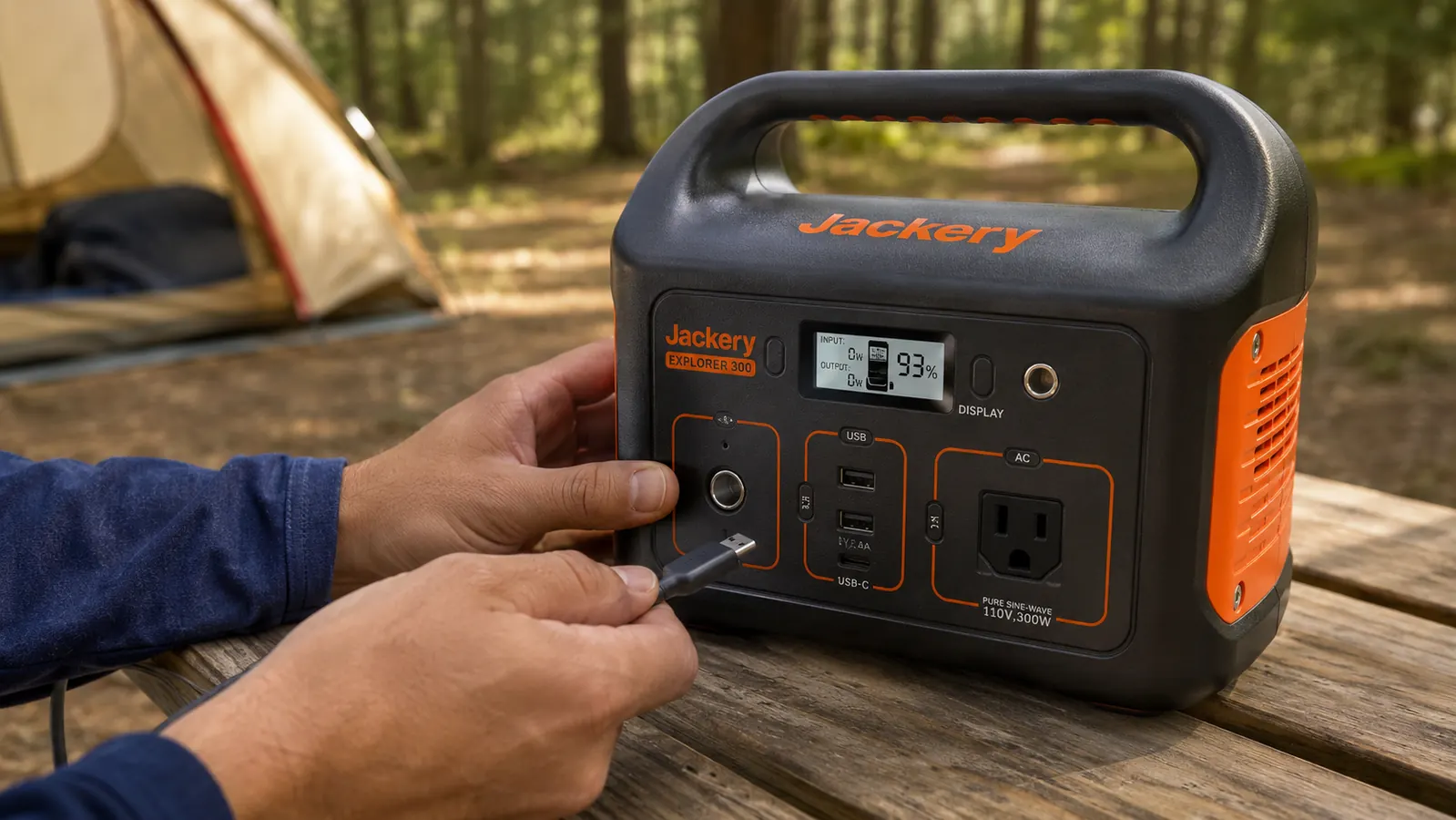
Where the EcoFlow River 2 Wins
The River 2's X-Stream charging is genuinely impressive. You can go from dead to full in about 60 minutes. On the Jackery you are looking at roughly five and a half hours plugged into a wall outlet. If you are doing back-to-back camping weekends with only one night at home in between, that charging speed matters. I got home Sunday afternoon, plugged in the River 2, and it was ready to go again before dinner. With the Jackery I had to plan to charge it overnight and make sure I remembered to start it early.
The River 2 also wins on the display and USB-C output. The LCD screen shows exact battery percentage and an estimated time-remaining readout, which is more precise than the Jackery's LED indicator. And the 60W USB-C port charges a laptop meaningfully faster than the Jackery's 18W port. If you are a heavy laptop user at camp, that gap adds up across a weekend. The River 2 also claims 800-plus battery cycles versus the Explorer 300's 500-plus, which could mean it holds its value longer as a daily-use unit.
Tired of dead phones and dead fans by Saturday night?
The Jackery Explorer 300 has 292Wh of capacity, six output ports, and a track record that goes back years. Check current pricing on Amazon before the next trip.
Amazon Check Today's Price on Amazon →On a three-day trip I cannot recharge mid-weekend. Capacity wins over charge speed every single time. The Jackery holds more, and that is the number that actually matters when you are 40 miles from the nearest outlet.
Real-World Load Tests: What Each Unit Actually Powers
On my Pisgah comparison weekend I ran an identical load from both units. The load: one 20W box fan on medium, one phone charging overnight, and one LED camping lantern for four hours in the evening. The Jackery finished the weekend with roughly 18 percent capacity remaining. The River 2 finished at about 11 percent. Neither unit quit. Both handled the load without issue. But the Jackery's larger capacity buffer gave me more breathing room on Sunday morning when we stayed an extra half day.
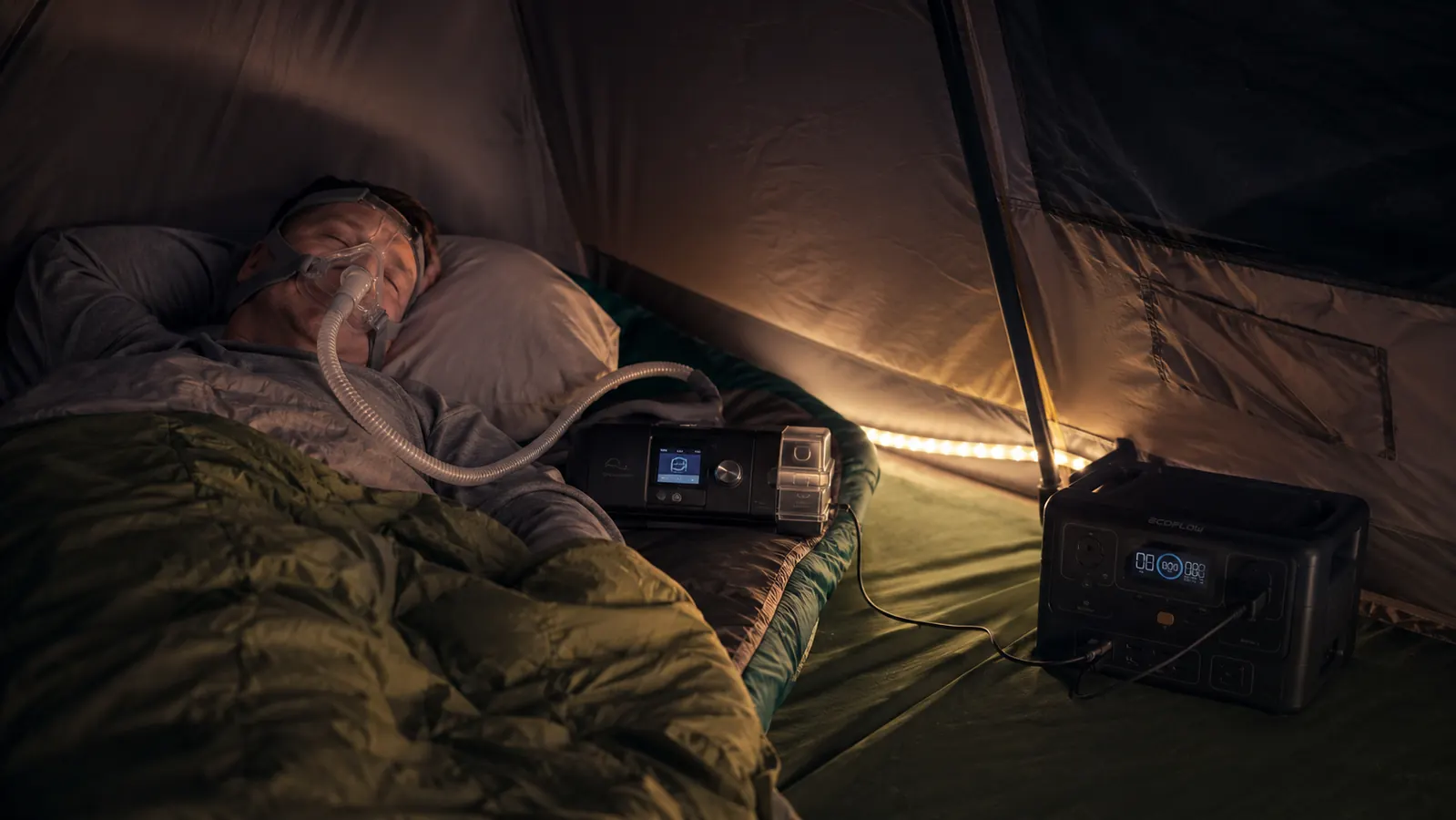
If you need to power anything with a compressor, a coffee maker, or a camp stove with an electric ignition, be aware that both units max out at 300W continuous. A standard 12-cup drip coffee maker draws around 900W. Neither of these stations can handle it. What they can handle: phone charging, tablet charging, CPAP machines (most draw 30 to 60W), LED lights, small fans, and laptop charging. Know your load before you commit to either unit.
Solar Charging: Both Work, One Is Easier
Both the Jackery Explorer 300 and the EcoFlow River 2 accept solar panel input. The Jackery pairs naturally with Jackery's own SolarSaga panels via its DC barrel port. The River 2 accepts solar input through its XT60 port and works with a wider range of third-party panels out of the box. If you already own a brand-agnostic folding solar panel, the River 2 is more likely to be plug-and-play. If you are starting from scratch and plan to buy a solar panel alongside the power station, the Jackery solar ecosystem is extremely well-documented with compatibility charts and exact watt-and-hour fill estimates.
On a clear August day at a south-facing campsite with a 100W panel, I was able to add about 60 to 70Wh to the Jackery in four hours. Not enough to fully recharge it from dead, but enough to extend a weekend trip by an evening. Solar topping-off works. Just do not count on solar as your primary recharge method unless you have a large panel and a long stretch of unshaded sky.
Price and Long-Term Value
Both units float near the same price range and both go on sale regularly. The Jackery Explorer 300 tends to drop during Amazon events and Jackery's own seasonal sales. The EcoFlow River 2 follows a similar pattern. On any given week, checking today's price on Amazon is the single best move, because these units can swing by 30 to 40 dollars depending on the day. I bought my Jackery during a sale and saved meaningfully versus the list price.
Long-term, I give the edge to the Jackery purely on the support and community angle. When I had a question about whether my unit was charging correctly after a firmware update, I found a Reddit thread from 2022 with the exact same question and a clear answer from a Jackery rep. That kind of searchable history does not exist yet for the River 2 because the product is newer. If you are the type of person who wants to troubleshoot without calling support, the Jackery ecosystem is more mature.
Who Should Buy Which
Buy the Jackery Explorer 300 if you camp two to four times a month, you want a power station that handles multi-night trips without stressing over capacity, you value a mature support ecosystem, or you are pairing it with a Jackery solar panel. The Explorer 300 is the steady, reliable choice for the camper who wants to plug it in, trust it, and not think about it again until next weekend.
Consider the EcoFlow River 2 if you have a predictable window to recharge at home between trips and the 60-minute wall charge is a genuine priority for your schedule. Or if you already own a non-Jackery solar panel and want the broader input compatibility. Or if you do most of your camping in a scenario where you can recharge every night and the per-cycle longevity of 800 cycles sounds appealing.
For most weekend campers reading this, the Jackery Explorer 300 is the better pick. More capacity, lighter, and a longer track record of working without surprises. You can read a deeper look at how it performed across a full year in our long-term review, or get the exact setup walkthrough in our guide on how to keep all your devices powered at camp without a hookup.
The Jackery Explorer 300 handles fans, phones, CPAP, and lights without drama
292Wh of LiFePO4 capacity, six output ports, and years of proven field use. Check today's price on Amazon and see if it is on sale right now.
Amazon Check Today's Price on Amazon →