
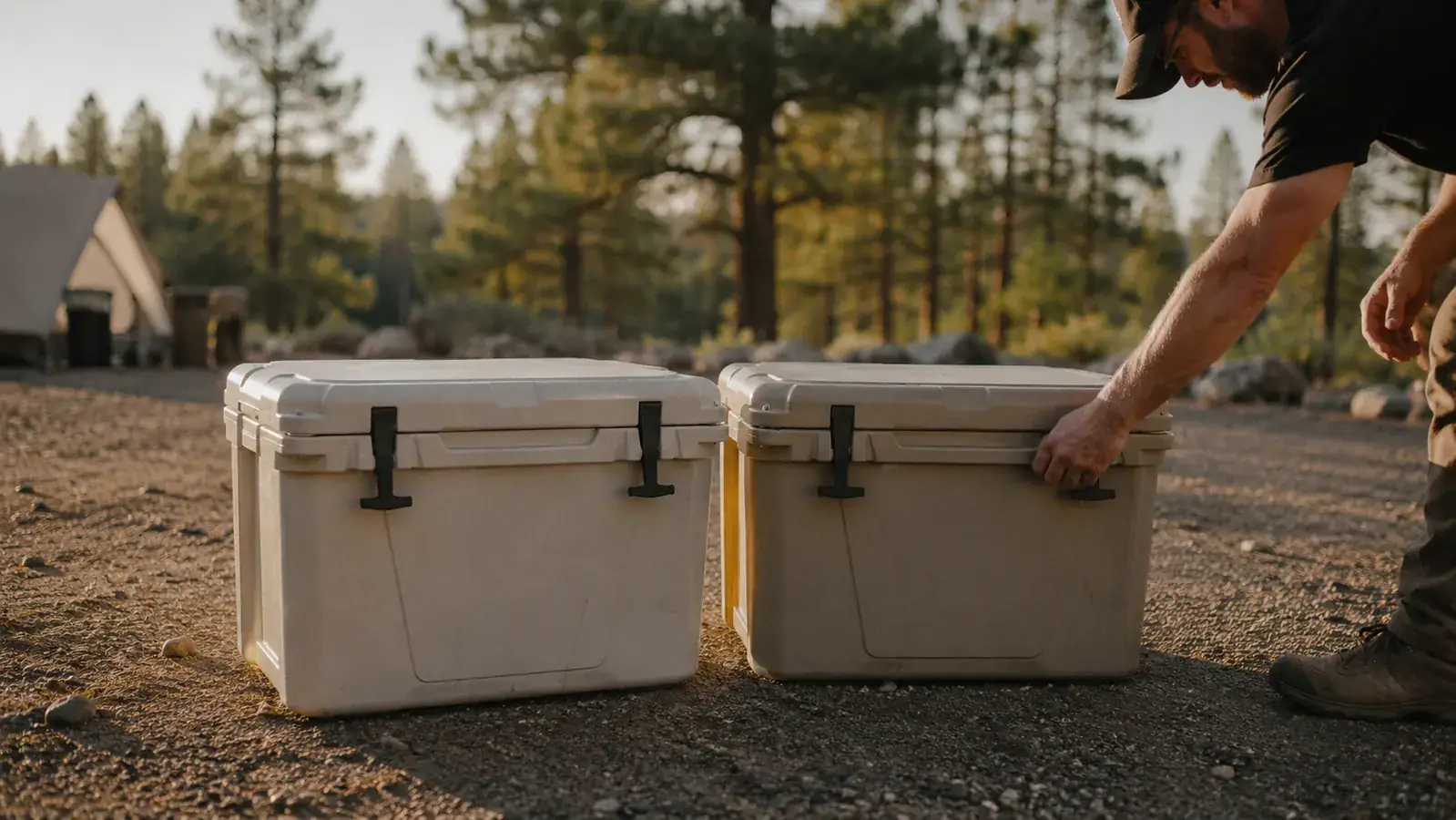
I put the Igloo BMX and the Yeti Tundra 45 in the same truck bed on a four-day trip to Pisgah National Forest last August. Temperatures hit 88 degrees both afternoons. I loaded each cooler with exactly 20 pounds of cubed ice, a rack of ribs, two pounds of ground beef, and the same assortment of drinks. My plan was simple: check the ice levels morning and evening and write down what I found. No lab equipment, no brand loyalty, just two coolers doing the one job they are supposed to do. I have run the Igloo BMX through three full camping seasons at this point, so I had history with it going in. The Yeti was borrowed from a buddy who swears by it, and I wanted to see for myself whether the premium was real.
The short answer is that the Yeti Tundra held ice about a day longer than the Igloo BMX. The longer answer is that one extra day of ice costs somewhere around two hundred dollars more at current prices, and that math does not work for most weekend campers. Here is everything I recorded, the build differences that actually matter, and a plain-English recommendation for each type of camper.
| Igloo BMX 52 Qt | Yeti Tundra 45 | |
|---|---|---|
| Capacity | 52 quarts | 45 quarts |
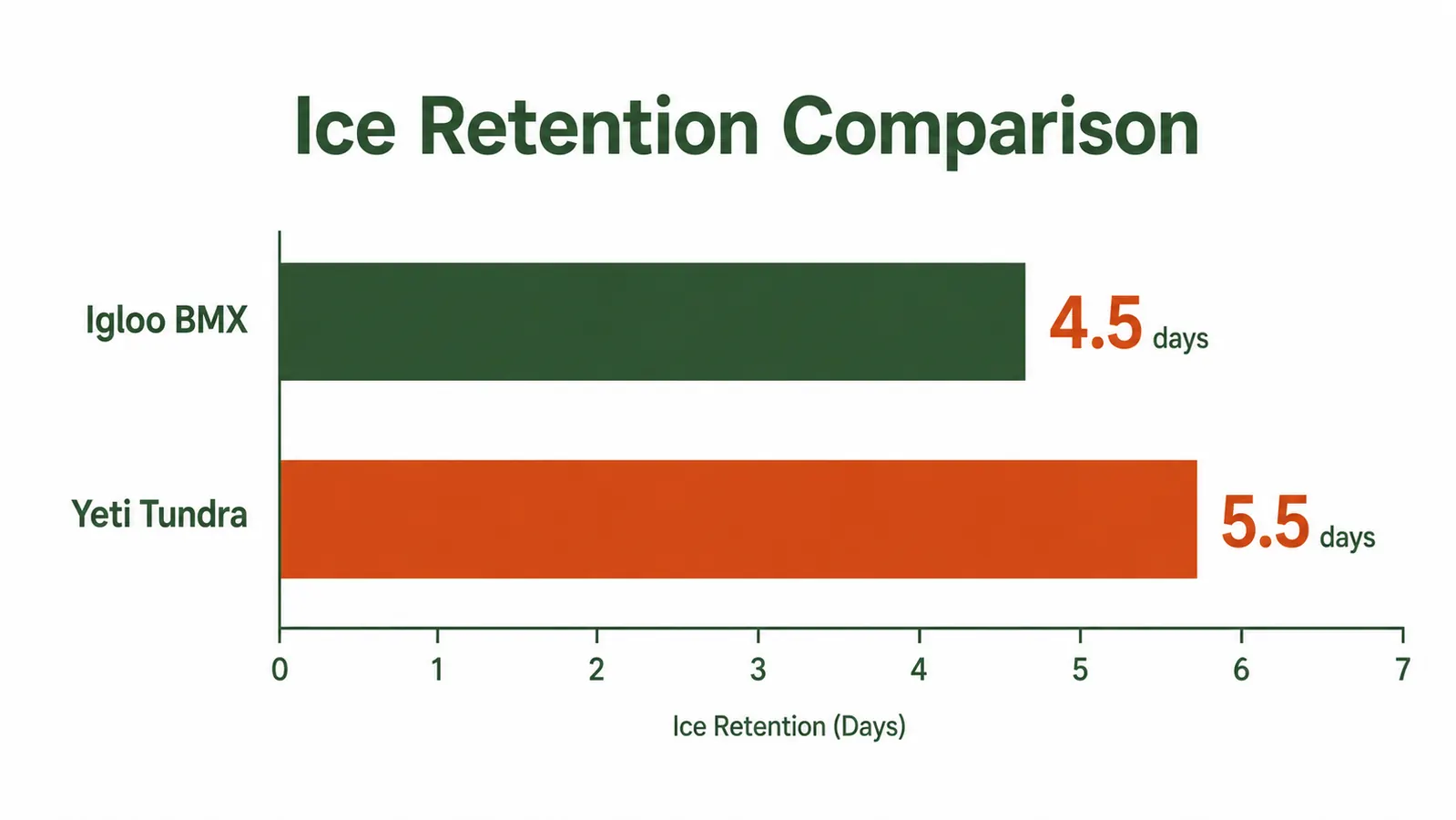
| Ice Retention (field test, 85-88 F) | 4.5 days | 5.5 days |
| Current Price Range | Check today's price on Amazon | Premium MSRP |
| Insulation Wall Thickness | 2 in. Ultratherm foam | 2.5 in. PermaFrost foam |
| Weight (empty) | 14.5 lbs | 21 lbs |
| Lid Gasket | Rubber T-gasket | Freezer-grade rubber gasket |
| Construction Method | Blow-molded shell | Rotomolded shell |
| Bear-Resistant Certification | No | Yes (IGBC certified) |
| Warranty | 5 years limited | 5 years limited |
Where the Igloo BMX Wins
The Igloo BMX holds more gear for less money, and it is meaningfully lighter to haul from the parking lot to the site. At 14.5 pounds empty versus 21 pounds for the Tundra, that difference adds up when you are carrying a full cooler a quarter mile down a trail or lifting it in and out of a truck bed a dozen times over a long weekend. The BMX also holds 52 quarts compared to the Tundra's 45, so if you are feeding a family of four for three nights, the Igloo wins on raw capacity before you even open either lid. You can fit a full brisket flat, a day's worth of drinks, plus breakfast ingredients for three mornings without playing Tetris.
The BMX also survived the trip with zero complaints. The handles are comfortable and rated to handle the loaded weight, the latch mechanism closes with a satisfying click and stayed closed on rough dirt roads, and the drain plug never loosened on its own. Igloo's Ultratherm foam insulation is not as thick as Yeti's PermaFrost walls, but it is real multi-layer foam, not hollow plastic air space. For three-day car camping in summer heat, it kept our food safe on every single trip I have run it through. The value per dollar here is genuinely hard to beat, and the 4.5-star average across more than 20,000 reviews backs that up.
More cooler for less money: the Igloo BMX is the practical pick for weekend campers
Rated 4.5 stars across over 20,000 reviews, the Igloo BMX delivers genuine ice retention without the three-figure premium. Check the current price on Amazon before it changes.
Amazon Check Today's Price on Amazon →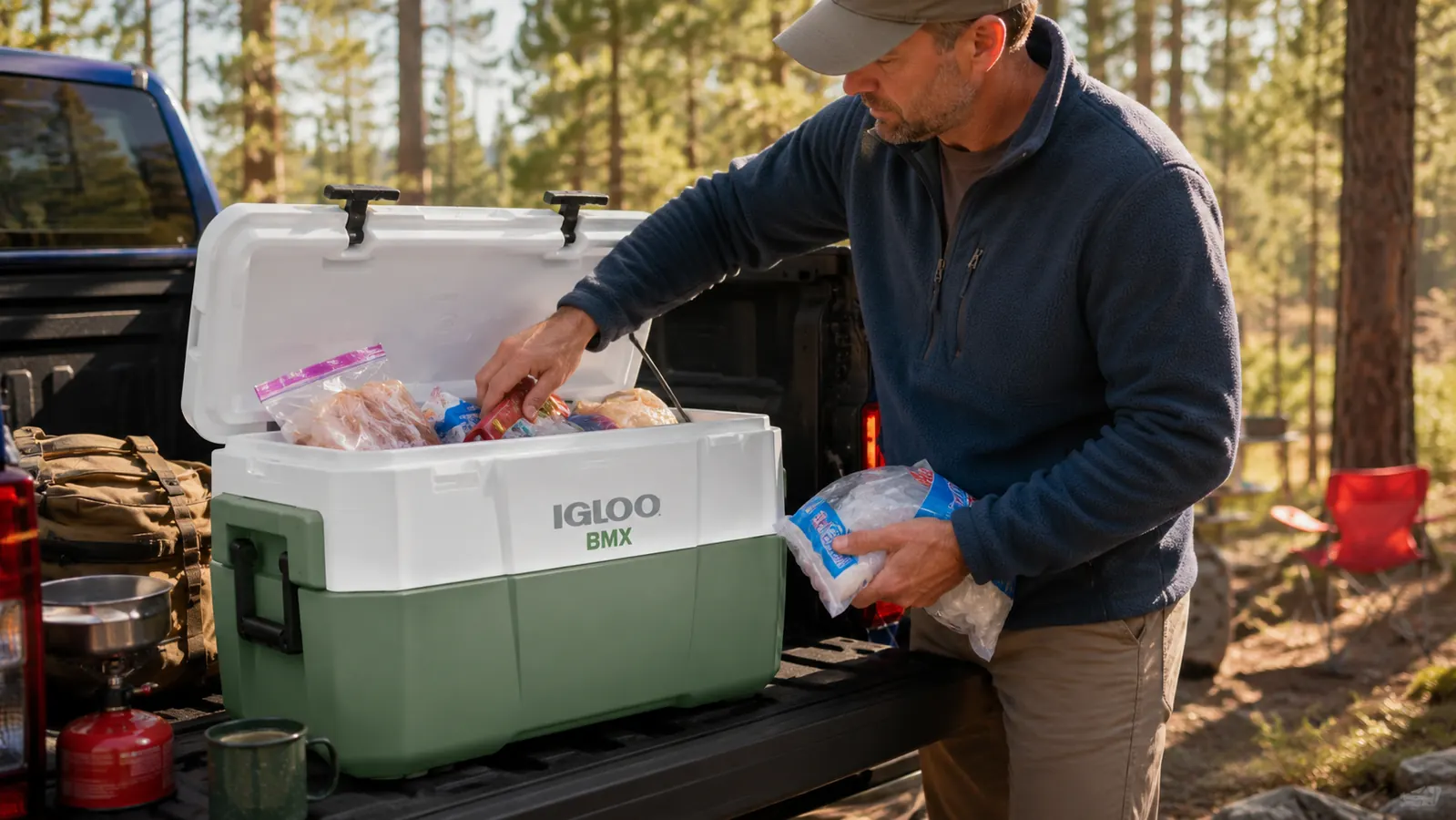
Where the Yeti Tundra Wins
The Yeti Tundra held ice about a day longer in my field test: 5.5 days versus 4.5 days with the same amount of ice under the same conditions. That is a real and measurable difference, and if you are running a five-day backcountry trip with no resupply point, that extra day of cold retention is not a luxury, it is a food safety margin. The Tundra's thicker PermaFrost insulation walls and its freezer-grade lid gasket create a tighter cold seal that the BMX simply cannot match once outside temperatures stay elevated for multiple days in a row.
The Tundra also carries IGBC bear-resistant certification, which matters in a growing number of national forest campgrounds where regulations require a certified container, not just a latched cooler. If you are camping in Yellowstone, parts of the Sierra Nevada, or any area where rangers check containers at check-in, the Yeti qualifies and the Igloo BMX does not. The Tundra's drain plug is also wider and easier to operate with one hand, a small but genuinely welcome detail when you are dumping meltwater in the dark on night two. And if you are hard on gear, the Yeti's rotomolded construction is thicker-walled and handles drops, heavy loads, and rough truck-bed rides with more confidence. None of that is hype. It is just what the extra money buys.
The Yeti held ice about a day longer. But that one extra day costs roughly two hundred dollars more. For most weekend trips, the Igloo BMX is the smarter buy.
Ice Retention in Practice: What the Numbers Mean
Both coolers started melting meaningfully on day three when afternoon temperatures peaked near 88 degrees. By the morning of day four, the Igloo BMX had about 40 percent ice remaining and the Yeti had about 55 percent. By the morning of day five, the Igloo was all meltwater and the Yeti still had a thin ice layer clinging to the bottom panels. For a three-night trip, both coolers keep food safely cold without any drama. For a four-night trip, the Igloo gets you there but you will want to eat the most perishable items first and keep the lid closed more often on day three. For a five-night trip with raw meat and dairy, the Yeti gives you a genuine safety margin.
What both coolers share is sensitivity to how you pack and position them. Pre-chilling the cooler the night before with a bag of sacrificial ice made a larger difference than which brand I was using. Block ice instead of cubed added nearly half a day of retention to both coolers. Keeping them in the shade under a reflective tarp added another few hours. A 2:1 ice-to-contents ratio by volume kept everything colder than the typical half-and-half approach. Technique closes most of the performance gap between these two coolers, and it costs nothing. If you want to maximize either cooler's ice life, the packing guide in our article on how to keep ice longer with any camping cooler walks through exactly that process step by step.
Build Quality and Long-Term Durability
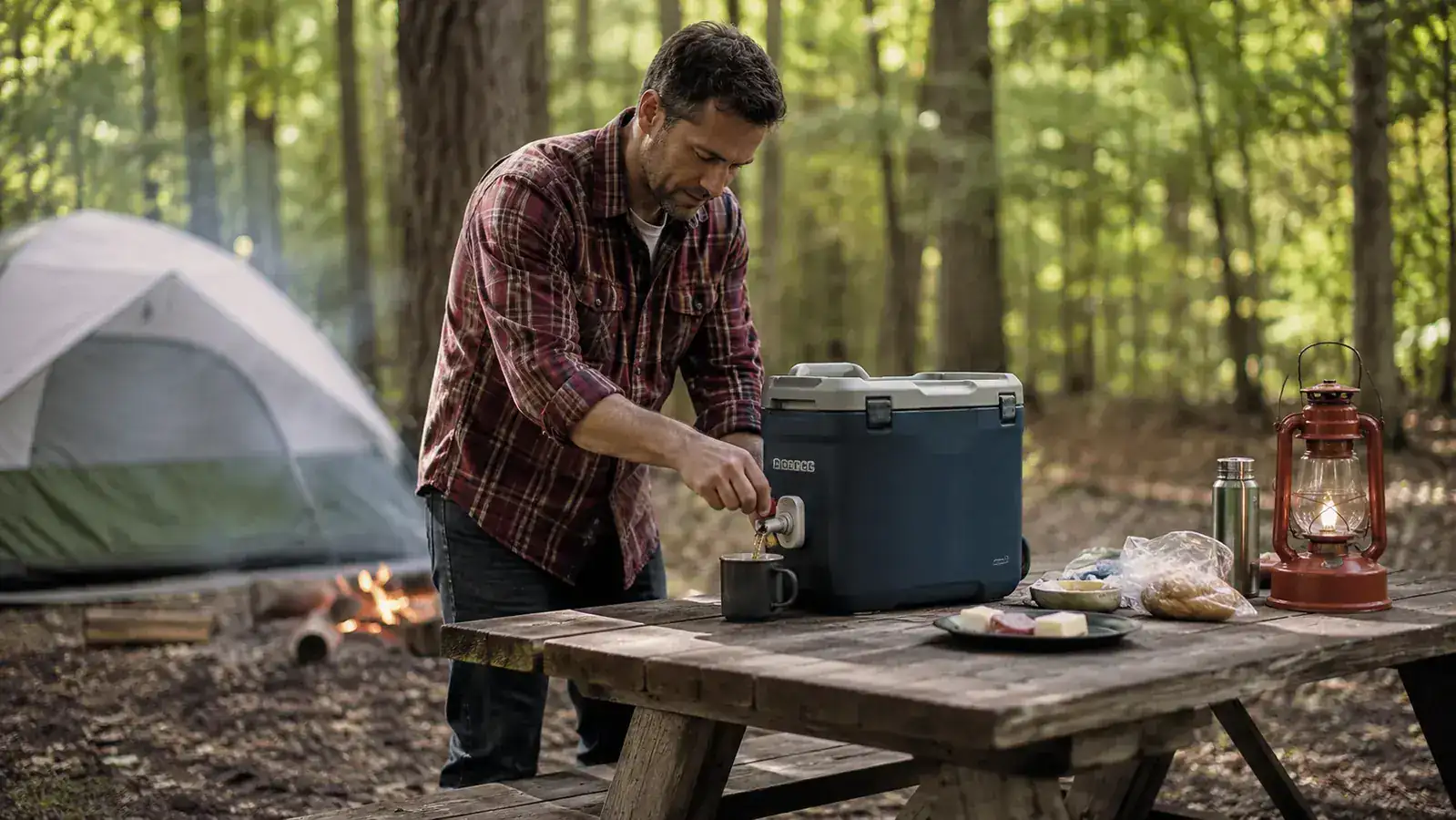
Yeti's rotomolded shell is visibly thicker and the lid feels more substantial in hand. When you press on the walls of the Tundra, there is almost no flex at all. The Igloo BMX uses a blow-molded construction that is lighter but does flex slightly when you push on the side panels. Neither cooler cracked, dented, or developed hinge issues on my trip or across a full camping season of use. The Igloo's stainless steel hinge rods are a nice touch at this price point, and the rubber feet on both held steady on uneven gravel and root-covered ground.
Both brands offer a five-year limited warranty with solid reputations for honoring it. I had a hinge issue on an older Igloo model and they sent a replacement part without argument. Yeti's support reputation is equally strong, so warranty coverage is effectively a draw. If you are buying for a long camping career and you intend to treat it rough across years of use, the Yeti's rotomolded shell will probably show less wear at the five-year mark. If you are a weekend car camper who takes care of gear, the Igloo BMX will last just as long under normal conditions.
Who Should Buy Which
Buy the Igloo BMX if you camp on weekends, you are packing for three nights or fewer, you want a larger-capacity cooler without paying for the Yeti premium, or you are buying your first quality hard-sided cooler. At the mid-range price point, it is a genuine upgrade from a thin-walled discount cooler and it will last for years of regular use. Most campers who compare these two honestly end up with the Igloo because the value math is just too clean to ignore. The extra capacity, the lighter weight, and the low price make it the default right answer for the vast majority of people shopping this category.
Buy the Yeti Tundra if you run trips longer than four nights without a resupply stop, you camp in a bear-regulation area that requires a certified container, you need the absolute maximum ice retention available in a non-electric form, or you are running a commercial guide or outfitter operation where the cooler takes daily punishment. The Tundra earns its price in those specific conditions. For the average weekend family camper, it is more cooler than the situation requires, and the two hundred dollar difference could go toward a lot of other gear.
If you want a deeper look at the Igloo BMX in isolation, including my full ice retention setup and what I found across three different camping trips this season, the Igloo BMX cooler long-term review covers it in detail. And if you are still deciding whether any hard-sided cooler is worth the upgrade from your current soft-sided bag, the breakdown in 10 reasons a hard-sided cooler is worth it walks through the case plainly without overselling either end of the price range.
The Igloo BMX: real ice retention, more capacity, without the Yeti price tag
Over 20,000 campers gave the Igloo BMX 4.5 stars. It is the hard-sided cooler most weekenders actually need. Check what it is selling for today on Amazon.
Amazon Check Today's Price on Amazon →