
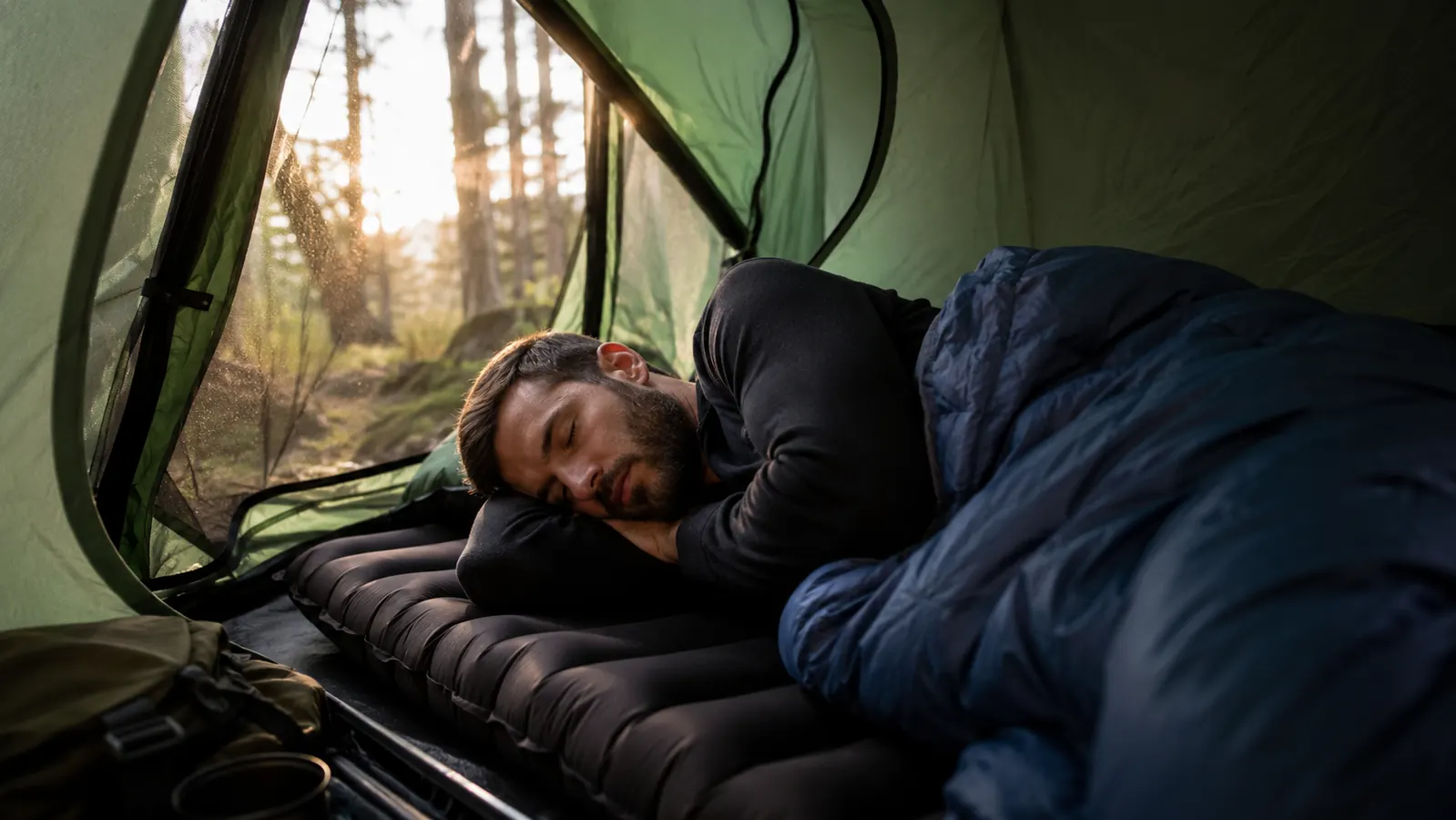
My wife looked at me across the breakfast table on a Sunday morning last October and said, 'You look terrible.' She was not wrong. I had just come back from a camping weekend at Patapsco Valley State Park in Maryland, a trip I had been planning for two months, and I was moving like a man who had spent the night in a bus station. Back tight, hips sore, right shoulder stiff from trying to avoid a root I could feel through my sleeping bag. I was 44 years old and I had slept on the ground for two nights and I felt every bit of it. That was the morning I finally admitted my old foam roll had to go, and the Sleepingo sleeping pad I ordered that week is the reason I sleep at camp now.
That was the third time in a row. May, I came home stiff. July, same thing. October, worse. Each time I told myself it was the site, or the temperature, or the fact that I had not stretched enough before bed. The truth was simpler and I did not want to admit it: I had been sleeping directly on a thin foam mat that I bought at a discount outdoor shop for around eight dollars in 2019. It was fine for my twenties. At 44 it was punishing me.
I almost skipped the spring trip entirely. My buddy Dave had already booked a site at Shenandoah and I had been dragging my feet on confirming. Part of me was using work as the excuse, but honestly, I did not want to wake up wrecked again. I liked camping. I liked the fire, the quiet, the disconnection. I just had stopped liking what happened to my body by Saturday morning.
Dave sent me a link to the Sleepingo Ultralight Sleeping Pad and said, 'Just try it. It is like thirty bucks.' I was skeptical. I had convinced myself that real comfort on the ground required either a thick foam roll that would not fit in my truck bed, or one of those premium inflatable pads that ran close to two hundred dollars. Thirty dollars felt like the same category of thing I already owned. Still, I ordered it, partly because I did not have a better idea and partly because Dave would not stop texting about it.
I woke up at 6:15 on Saturday, before my alarm, and the first thing I noticed was that I could not tell you which side I had slept on. My hips did not hurt. My shoulder was fine. I just felt like I had slept.
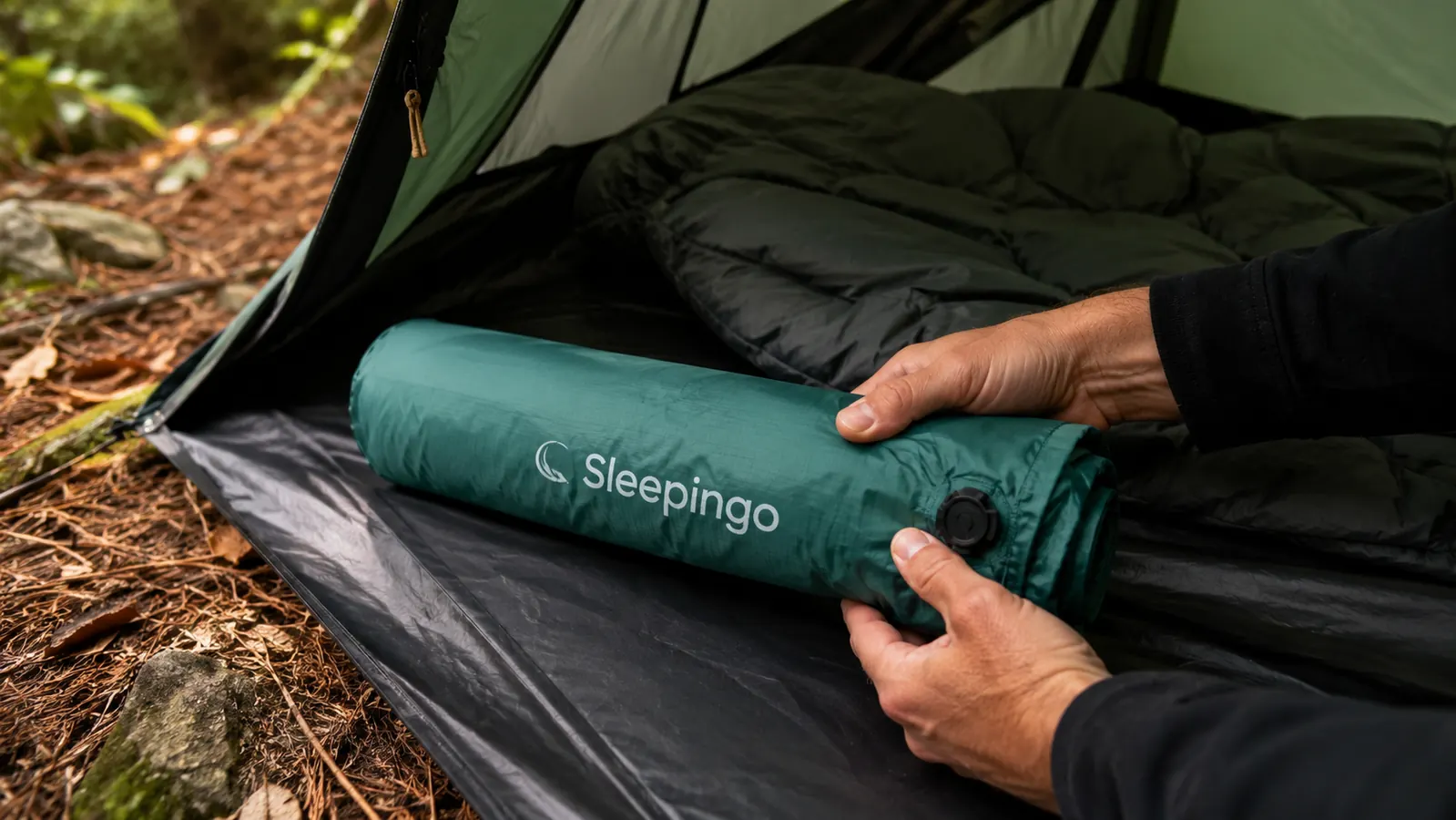
The pad showed up two days before the trip. It is smaller than I expected when packed, about the size of a large water bottle. I inflated it in maybe ninety seconds using the built-in pump sack, which is basically a dry bag you fill with air and roll down to push air into the valve. No electric pump, no blowing until you see stars, just five or six rolls of the bag and it is firm. I set it on the living room floor and lay on it for about four minutes feeling mildly silly. It felt like actual cushioning.
Still waking up sore on camping trips? This is the fix.
The Sleepingo inflatable sleeping pad weighs under 14 ounces, packs to the size of a water bottle, and costs less than dinner out. Over 34,000 people have rated it, which means the comfort is not a fluke.
Amazon Check Today's Price on Amazon →
At Shenandoah I set up camp on a site that had a slight slope and a few hidden bumps I felt through my boots. I smoothed out a spot, put down the Sleepingo, slid my sleeping bag on top, and that was the whole setup. The pad stayed inflated overnight. I did not wake up at 2am on a deflating mattress. I did not spend the first hour of night trying to find a position that did not hurt.
I woke up at 6:15 on Saturday, before my alarm, and the first thing I noticed was that I could not tell you which side I had slept on. My hips did not hurt. My shoulder was fine. I just felt like I had slept. That sounds like nothing if you have always had a good camp pad, but after three trips of misery it felt significant enough that I just lay there for a minute being quietly relieved. Dave was still asleep. I made coffee and watched the ridgeline go from gray to orange and I thought, 'Okay, this is why I do this.'
It is not a fancy pad. The R-value is around two, which means it is not suited for shoulder-season camping below about 35 degrees Fahrenheit without a sleeping bag rated to compensate. On cold ground you will feel that. I use it for three-season trips, May through October, and in that range it has been exactly right. It is 72 inches long by 20 inches wide, which fits a six-foot person without the sleeping bag hanging off the edge. The material has held up through five trips now with no leaks and no obvious wear on the seams.
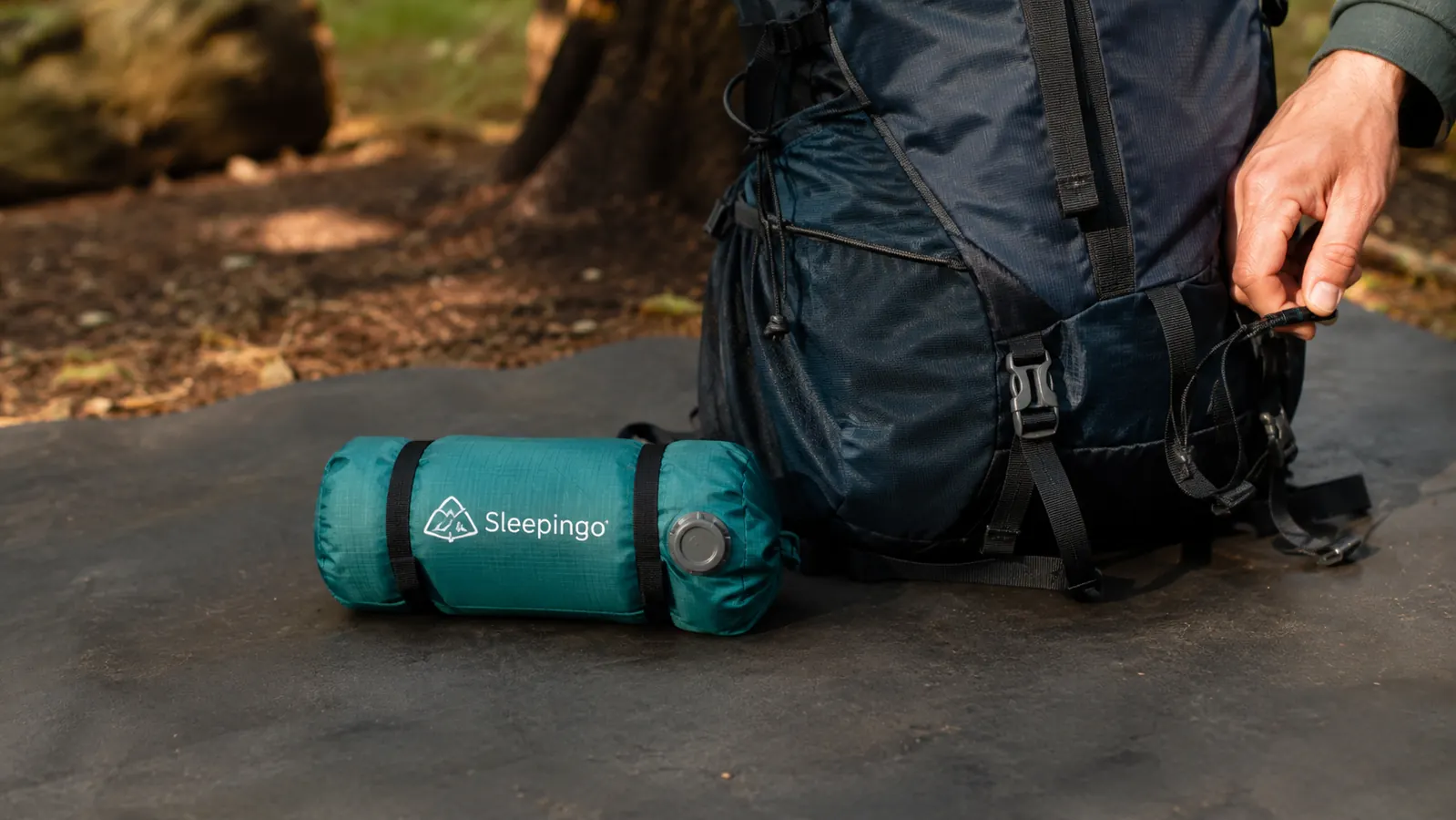
The one thing worth knowing is that deflating it takes a minute or two of rolling from the bottom to push the air out before you fold it back into its stuff sack. It is not difficult, just a step some people skip and then wonder why it will not pack small again. Roll from the bottom, open valve, squeeze as you go. Takes about ninety seconds and then it is back to water-bottle size.
What I'd Tell You If We Were Sitting at My Kitchen Table
Here is what I would actually say to you. If you are sleeping on a foam mat that cost less than fifteen dollars and you are waking up stiff on camping trips, the pad is the problem, not your age and not the campsite. I spent three seasons blaming everything else before I spent thirty dollars on a real solution.
The Sleepingo is not going to feel like your bed at home. It is a camp pad. But it is enough cushion to keep your hip bones off the ground and enough insulation to take the cold edge off a mid-spring night. That is genuinely all it needs to do. It does both of those things consistently and it packs down small enough that I toss it in my bag without thinking about it now. It went from gear I dreaded dealing with to gear I forget is there because it just works.
I confirmed for the Shenandoah trip on the drive home from that October weekend. I am glad I did. I have been back four times since. If the pad is the thing standing between you and going, stop overthinking it. Current price on Amazon is right around what you would spend on two cups of coffee and a sandwich at a trail cafe. If that amount of money is going to meaningfully change how you feel on Saturday morning, it is the easiest call in your camping kit.
Ready to stop waking up sore? The Sleepingo is worth every dollar.
Lightweight enough for backpacking, comfortable enough for a 44-year-old with a bad back. Check current pricing and read what over 34,000 verified buyers think before your next trip.
Amazon Check Today's Price on Amazon →