
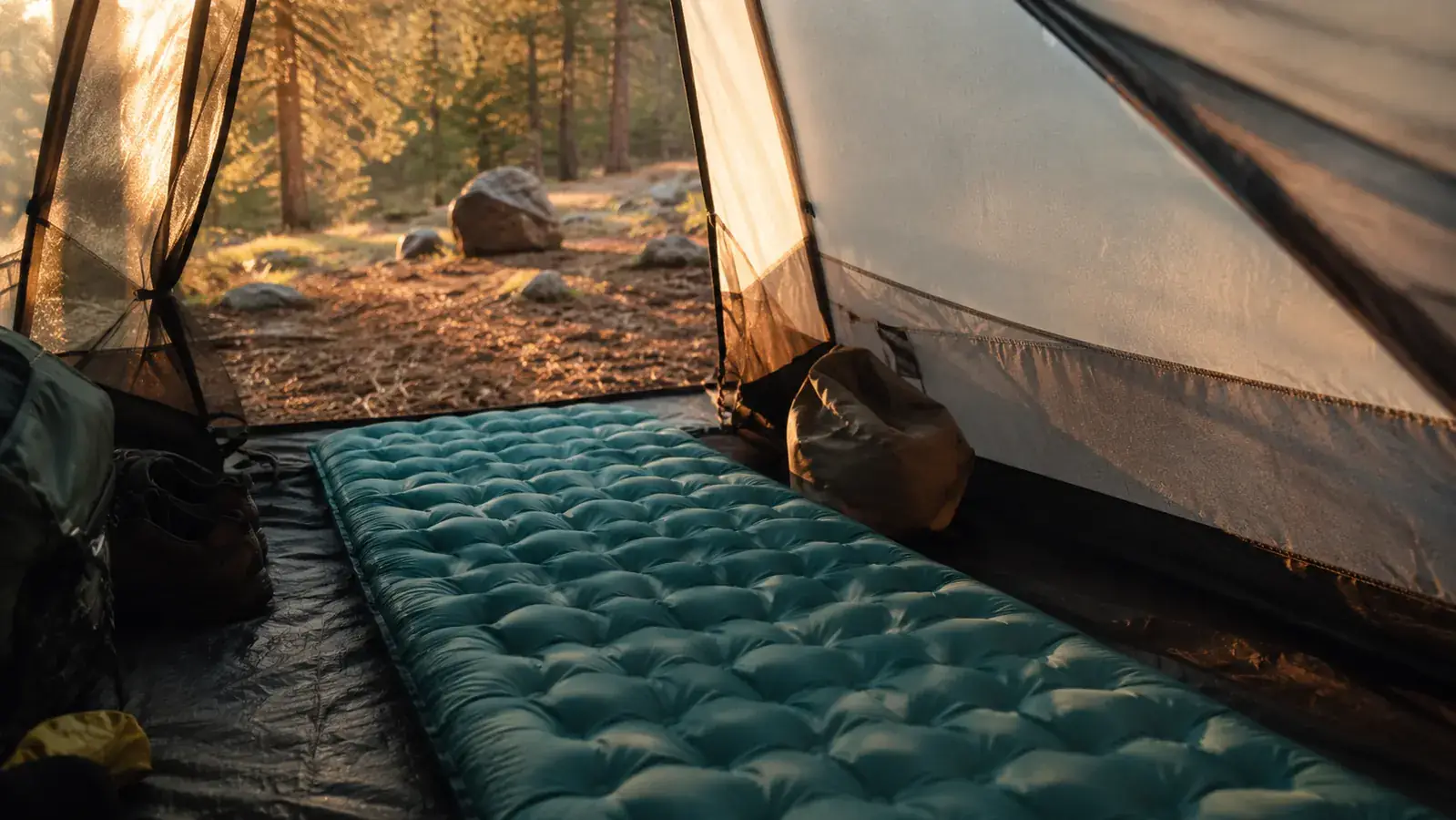
My name is Cal, I am 41 years old, and I have a bad relationship with sleeping on the ground. My hips start complaining around 2 a.m., my lower back stages a full protest by 4, and I spend half the drive home wishing I had just booked a cabin. For the longest time I convinced myself that sleeping pads were all the same and none of them were going to save me. Then I picked up the Sleepingo Ultralight Inflatable Sleeping Pad on a whim, mostly because I did not want to spend real money on something I was skeptical about. That was about a year ago. Since then I have put it through eighteen overnight trips across three states, a full range of temperatures from about 32 degrees on a late-September trip in the Smokies down to mild July nights, and terrain ranging from packed gravel to root-covered forest floors. Here is everything I know about the Sleepingo sleeping pad after living with it.
The Quick Verdict
A genuinely comfortable, packable budget pad that earns its 4.3-star rating, with one real tradeoff: the valve needs care and inflation takes longer than it should.
Amazon Check Today's Price →If you are sleeping on the tent floor right now, this is the fix that costs less than a tank of gas.
The Sleepingo inflatable sleeping pad is currently available on Amazon. Check whether the current price is still as low as when I bought mine.
Amazon Check Today's Price on Amazon →How I Have Used It
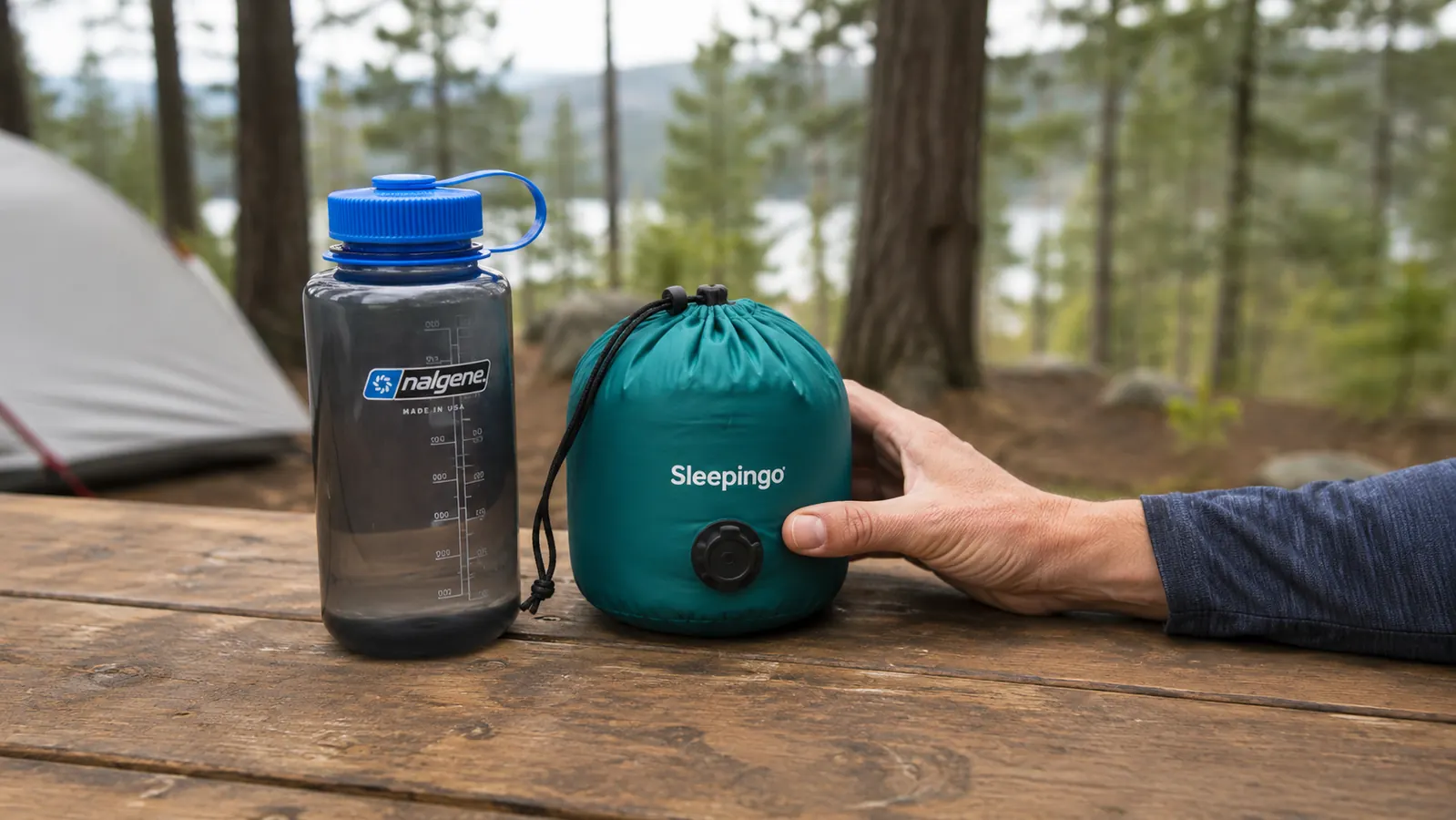
I am a car camper and occasional short-trail backpacker. I mostly camp with my partner Dana and sometimes with a group of four or five friends, which means I need gear that packs small enough to not take over the back of a Subaru Outback but does not have to survive a multi-day thru-hike. The Sleepingo hits that middle ground well. It weighs 14.5 ounces on my kitchen scale, which matches the listed spec almost exactly, and it packs down to roughly the size of a 32-ounce Nalgene when rolled tight and stuffed. It sits in the side pocket of my 65-liter pack without crowding anything else out.
The pad is 72 inches long and 20 inches wide, which is narrower than most people expect. I am 5-foot-11 and I fit fine length-wise, but I have rolled off the edge twice on nights when I was especially restless. If you sleep wide or shift around a lot, the 20-inch width is a real constraint to consider. The 40D nylon shell feels substantial for the price, and after eighteen trips it shows no abrasion wear from the rocky and rooty surfaces I have set it on.
The Conditions I Tested It In
I want to be specific here because vague gear reviews drive me crazy. My eighteen trips included six nights on car-camping sites in North Carolina with ground temps between 50 and 65 degrees, four nights on sandy sites in Florida in the high 60s, three nights in Tennessee mountains with temps dipping to 32 on the coldest night, and five nights in Virginia on mixed gravel and grass. I also brought it on two short overnight backpacking trips where I carried it about four miles each way. The surface conditions ranged from soft dirt and pine needles, where the pad works best, to hard-packed gravel and exposed roots, where the pad still performed but I could feel underlying bumps through the material when I lay still.
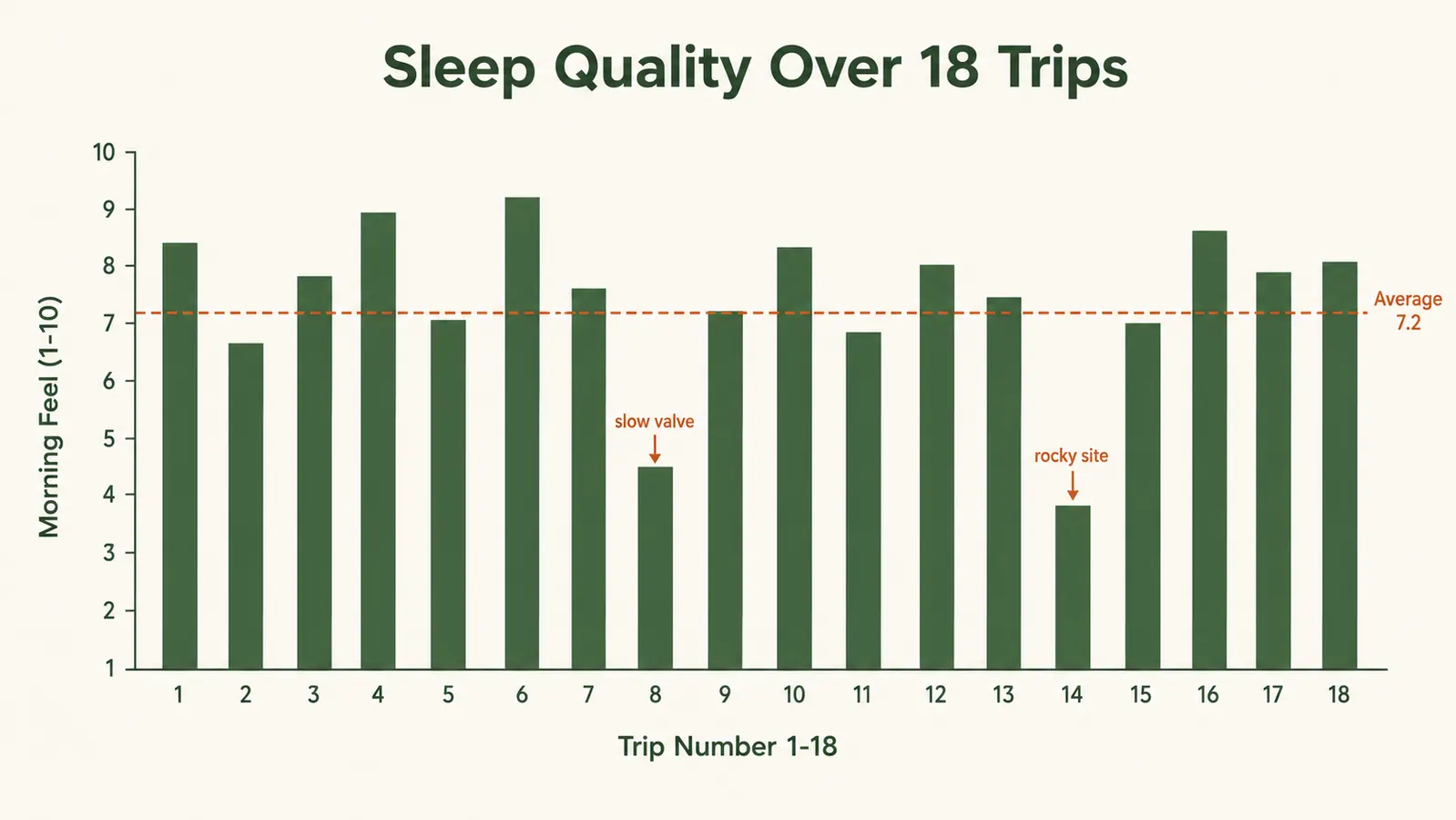
None of those conditions punctured the pad. On the two gravel-heavy nights I put a lightweight tarp underneath purely as a precaution, not because the pad showed any signs of failure. On the root-covered forest floor in Tennessee I did not use a tarp and the pad survived fine. I would still recommend a ground cloth under it when you know the surface is sharp, but I no longer feel like I am gambling with a fragile piece of gear.
Inflation: It Takes More Effort Than You Expect
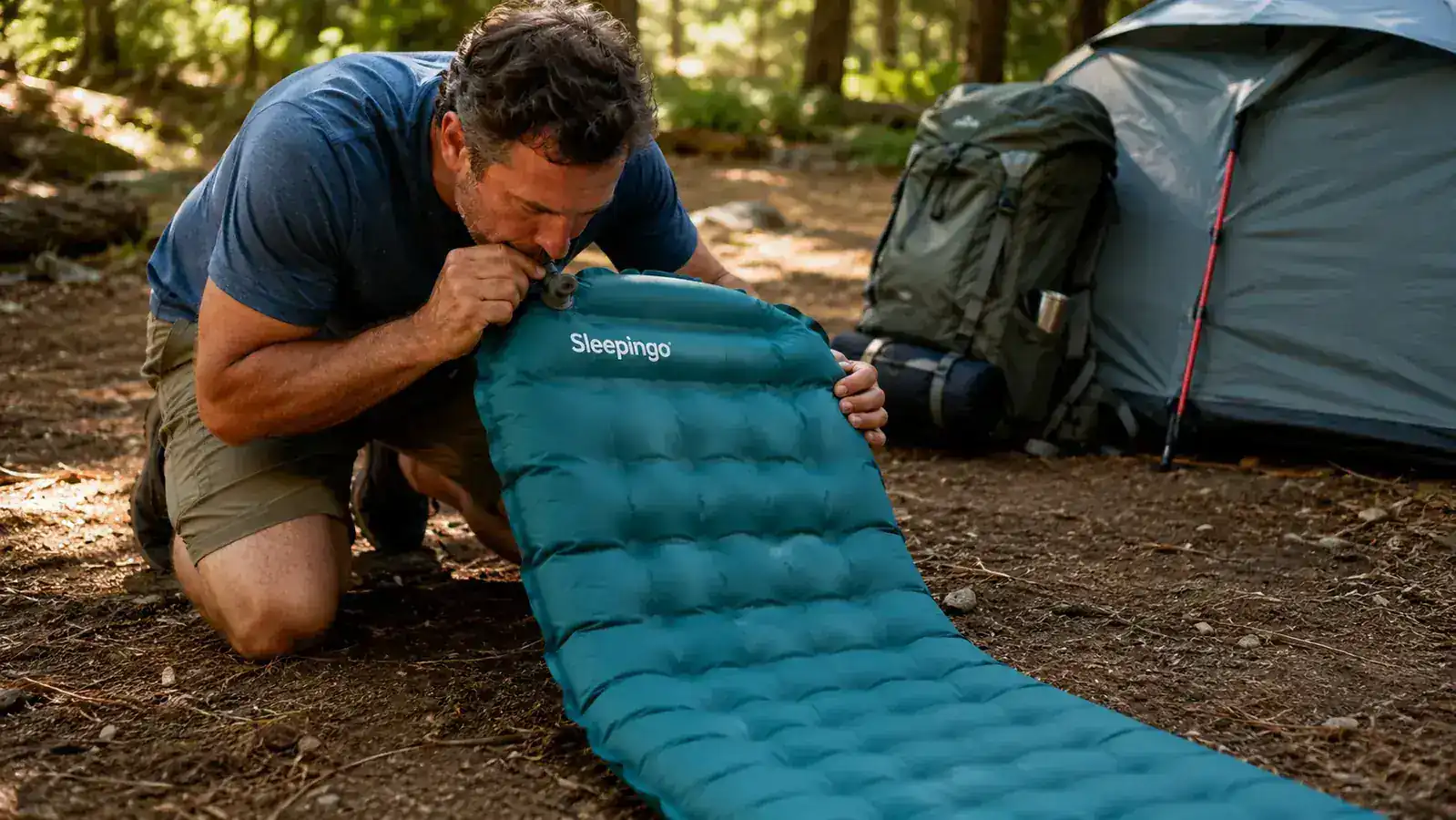
I want to be straight about this because it came up in my use and it shows up in enough Amazon reviews that it is not just me. Inflating the Sleepingo by mouth takes real effort and real time. The twist valve works, but the opening is small, and you are blowing against increasing back-pressure as the pad firms up. On a typical night I spend four to six minutes getting the pad to a firmness I am happy with, compared to maybe two minutes on a pad with a larger dual-action valve. On cold nights when your lungs feel tighter and your breath is wasted warming up, it can push toward seven or eight minutes. That is not a dealbreaker, but it is honest. You are tired at the end of a camping day, and the last thing you want is a prolonged inflation ritual.
The upside is that the valve, once you get the inflation technique right, holds air very well. In my first year I had one slow leak, not from the pad body but from the valve not being twisted fully closed. I woke up on a September night in Tennessee at about 50 percent inflation and spent a miserable two hours before sunrise figuring out what had happened. Once I learned to give the valve an extra quarter-turn and double-check it before lying down, the problem did not repeat. Other reviewers have reported similar experiences, so call it a valve that rewards careful use rather than a defective component. A small pump bag sold separately would solve the inflation time problem entirely. I have seen campers stuff one in their kit for about eight dollars and it cuts inflation time to under a minute.
Comfort and Sleep Quality Over Time
When the pad is properly inflated, it is 3.2 inches thick and noticeably soft under your hips and shoulders. I am a side sleeper, which is the hardest test for a sleeping pad because hip bones and cold ground do not mix. The first few trips I was surprised enough by how well I slept that I kept checking whether I had accidentally bought a nicer pad. On nights above 45 degrees I slept through until my usual 5:30 a.m. without the hip pain I had come to accept as a normal part of camping. The lightly textured surface keeps the pad from sliding around inside a sleeping bag, which matters more than I expected on uneven ground.
Below 40 degrees the picture changes. The Sleepingo has an R-value of around 2, which the brand does not clearly disclose on the product page but which aligns with what independent testers have reported for this type of construction. An R-2 rating is fine for three-season camping in moderate conditions but starts to fall short when ground temps drop near or below freezing. On my late-September Smokies trip at 32 degrees I woke twice with cold seeping through the pad into my hips. I ended up sleeping on top of my fleece jacket for added insulation and that helped. This is a typical limitation for budget inflatable pads, not a unique flaw in this one, but it is worth knowing before you take it on a cold-weather outing.
On nights above 45 degrees I slept through until 5:30 a.m. without the hip pain I had come to accept as a normal part of camping. That alone was worth the price of admission.
Durability Over Eighteen Trips
The two things I worried most about when I bought a budget pad were punctures and seam failures. Neither has happened. I have set the Sleepingo down on gravelly sites without a tarp and on roots without extra padding. The 40D nylon has not developed any holes or visible thinning. The seam tape along the sides looks as clean as when it shipped. I carry a small patch kit just in case, but I have never opened it. The only wear I can point to is light scuffing on the bottom surface near the foot end, which has not affected performance or air retention.
The valve housing is the component I watch most carefully. The plastic around the valve stem feels slightly less rigid than I would prefer, and on two occasions I noticed it had loosened slightly after being compressed in my pack for several hours. Both times a firm retightening before bed solved the problem. I can imagine that after a couple more years of use, the valve stem could work loose for good. If that happens, a replacement valve kit is cheap and not hard to install, but I would rather not have to think about it. It is the one area where paying more for a name-brand pad buys you genuine engineering rather than just a logo. Given that this pad costs a fraction of what those pads cost, the tradeoff is reasonable, but go in with eyes open.
How It Compares to Spending More
I have borrowed a Therm-a-Rest ProLite from a camping friend on two trips. The ProLite self-inflates faster, has a higher R-value, and uses a valve design I have never once had to think about. If I were planning serious backpacking trips in shoulder-season temperatures regularly, the ProLite would be the smarter long-term investment. But for someone who camps ten to twenty nights a year on car-accessible sites in three-season weather, the Sleepingo delivers about 85 percent of the ProLite experience at roughly 25 percent of the cost. That math is hard to argue with. I have a full comparison written up if you want to see the detailed side-by-side breakdown between those two pads.
Within the budget category the Sleepingo holds its own. Its 3.2-inch thickness beats most competitors at this price, and the 40D shell is heavier-duty than the 20D or 30D materials you often find in sub-thirty-dollar pads. The main thing I would change is the valve. A wider-mouth opening with a simpler close mechanism would eliminate the one real friction point this pad has. Everything else about the design is thoughtful for the price.
What I Liked
- Genuinely comfortable for a side sleeper when properly inflated
- Packs to Nalgene size and weighs under 15 ounces
- 40D nylon shell has resisted punctures on gravel, roots, and rough dirt
- Holds air reliably for full nights once valve is fully seated and checked
- 3.2-inch thickness beats most alternatives in this price range
Where It Falls Short
- Inflation by mouth takes 4 to 6 minutes and real lung effort
- Valve requires a deliberate extra quarter-turn to seat fully, easy to under-close
- R-value of approximately 2 is marginal below 40 degrees
- 20-inch width is narrow for restless sleepers or anyone over average build
- No pump bag is included; buying one separately is almost necessary for easy use
Who This Is For
The Sleepingo is a strong buy for car campers and weekend backpackers doing three-season trips in moderate temperatures. If you are currently sleeping on a foam mat or directly on the ground, the jump in morning comfort will feel dramatic. It is also a smart choice for anyone who wants to test whether an inflatable pad actually works for them before spending serious money on a premium option. Think of it as a real trial pad with genuine build quality behind it, not a throwaway. If it works for you, you will know exactly what features matter when you are ready to upgrade. And if you want the broader case for why a sleeping pad changes your whole camping experience, that is worth reading too before you make a final call.
Who Should Skip It
If you camp regularly below 40 degrees or do any winter camping at all, the Sleepingo's R-value will leave you cold. Step up to a pad rated R-4 or higher for those conditions. If you are a wide sleeper or a serious side-to-side mover, the 20-inch width will frustrate you; look for something 25 inches or wider. And if you cannot stand fussing with a valve before bed, a self-inflating pad or a design with a one-way pump valve will suit you better. The Sleepingo rewards a small amount of care and habit around the valve check. If you are not the type to do a quick pre-sleep equipment confirmation, that specific management task could wear on you over multiple trips.
Ready to stop waking up stiff at 2 a.m.? The Sleepingo is worth trying at this price.
After a full year of honest use, this is still the pad I reach for on three-season weekends. Check the current price on Amazon and see if it is still the deal I found.
Amazon Check Today's Price on Amazon →