
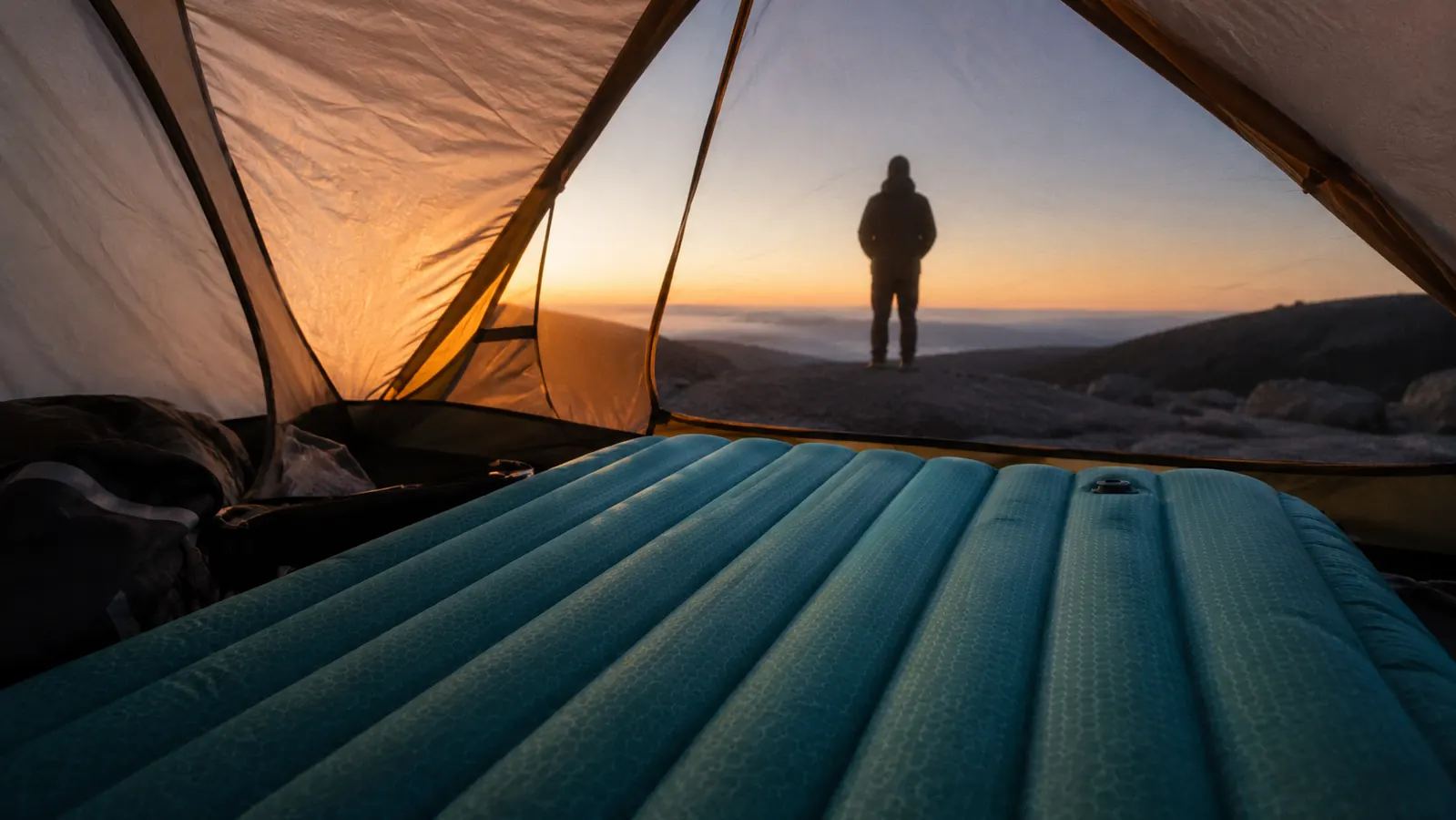
I want to tell you about the moment I started paying attention to this pad for reasons I did not expect. It was 11pm on a late-September Friday at a site in the Ocala National Forest, the ground temperature had dropped to around 48 degrees, and I was lying on my side staring at the tent ceiling wondering why my hip kept sinking toward the dirt. The Sleepingo pad I was on had been inflated about ninety minutes earlier and had already lost maybe fifteen percent of its air. Not catastrophically flat. Just soft in the middle. Enough to notice. Enough that I was done sleeping and starting to think.
That one experience sent me down a rabbit hole. I have now used this pad across multiple trips, on three different ground surfaces, and in temperatures ranging from 44 to 72 degrees. The Sleepingo Ultralight Sleeping Mat has a 4.3 star rating across more than 34,000 Amazon reviews. That rating is mostly fair, but the aggregate hides some specific realities that matter a lot depending on how you sleep and where you camp. This review is about those realities.
The Quick Verdict
A genuine value for warm-weather backpacking and car camping above 50F, but side sleepers and cold-night campers will hit its limits fast.
Amazon Check Today's Price →If you sleep on your side or camp below 50F, read the R-value section before you buy.
The Sleepingo pad is currently available on Amazon. Check today's price and make sure the size and R-value match your actual camping conditions before ordering.
Amazon Check Today's Price on Amazon →The Valve Problem Nobody Mentions in the Listing
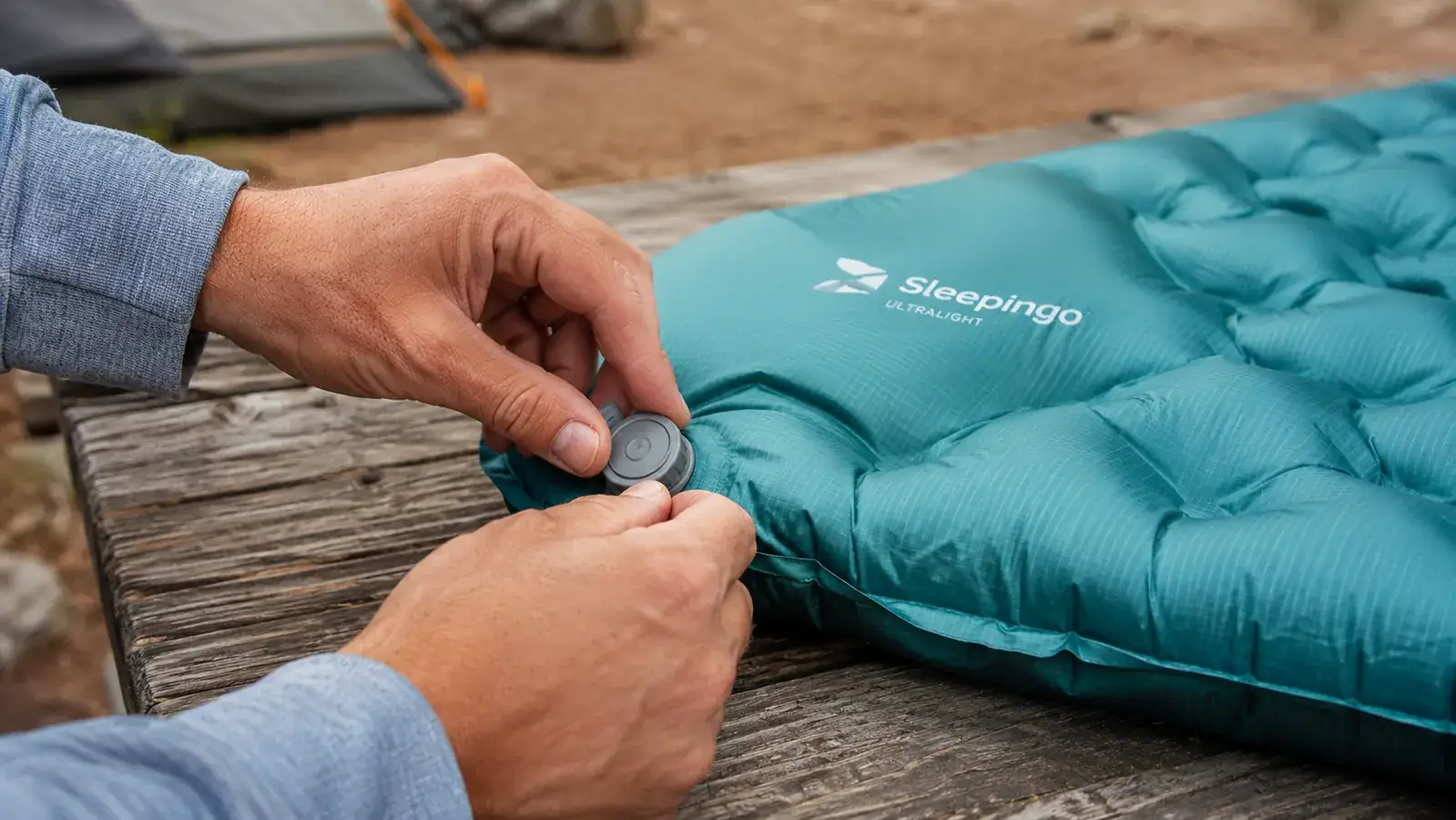
The most consistent issue I found across my own use and hundreds of verified reviews is the valve seal. The Sleepingo pad uses a standard twist-to-open, twist-to-close inflation valve. That valve works fine on the first inflate. The problem shows up around trip three or four, when the rubber seal inside the valve housing starts to seat inconsistently. You inflate the pad, close the valve, press on the surface to check pressure, and you can hear a faint hiss. Sometimes it stops after a few seconds. Sometimes it does not.
In my case, I started keeping a mental note of where I had to position the valve body to get a clean seal. Slightly past the click, not right at it. That is a workaround, not a fix, and it is the kind of thing that matters at 11pm in the dark. Sleepingo replaced one of my pads under warranty with zero argument, so their customer service is responsive. But you should know going in that the valve is the weak point, not the seams, not the fabric, not the welds. If you are buying this pad, carry a small strip of plumber's tape in your kit and use it to reinforce the valve thread if you start feeling give in the seal. That tape costs almost nothing and has saved at least two camping nights for me.
The Real Inflation Time Under Field Conditions
The product listing says the pad inflates in about 10 to 15 breaths. That number is technically possible under ideal conditions: warm air, you are breathing hard, and you are not fatigued from setting up camp. In field conditions, with cold ambient air and the normal tiredness of arriving at a site after a two-hour drive, I averaged closer to 25 to 30 breaths to hit a pressure I was happy with. Cold air is denser than warm air and it does not expand the same way once inside the bladder. The pad can feel firm right after inflation and then lose a noticeable amount of loft within the first thirty minutes as the air inside adjusts to the ambient temperature.
This is not a defect unique to Sleepingo. Every inflatable pad does this to some degree. But because this pad inflates by mouth and has no valve adapter for a pump sack, you are going to be lightheaded after inflation if you rush it. Take your time, close the valve partway, check pressure, add a few more breaths. Plan for five minutes, not two. If you are backpacking and blow this pad up right after a long uphill approach, you are going to be dizzy. That is a predictable reality that the listing does not flag. I find it easiest to set up the pad first when I arrive at site, before doing anything else, so I can inflate slowly while still fresh.
What R-Value 1.8 Actually Means on a Cold Night
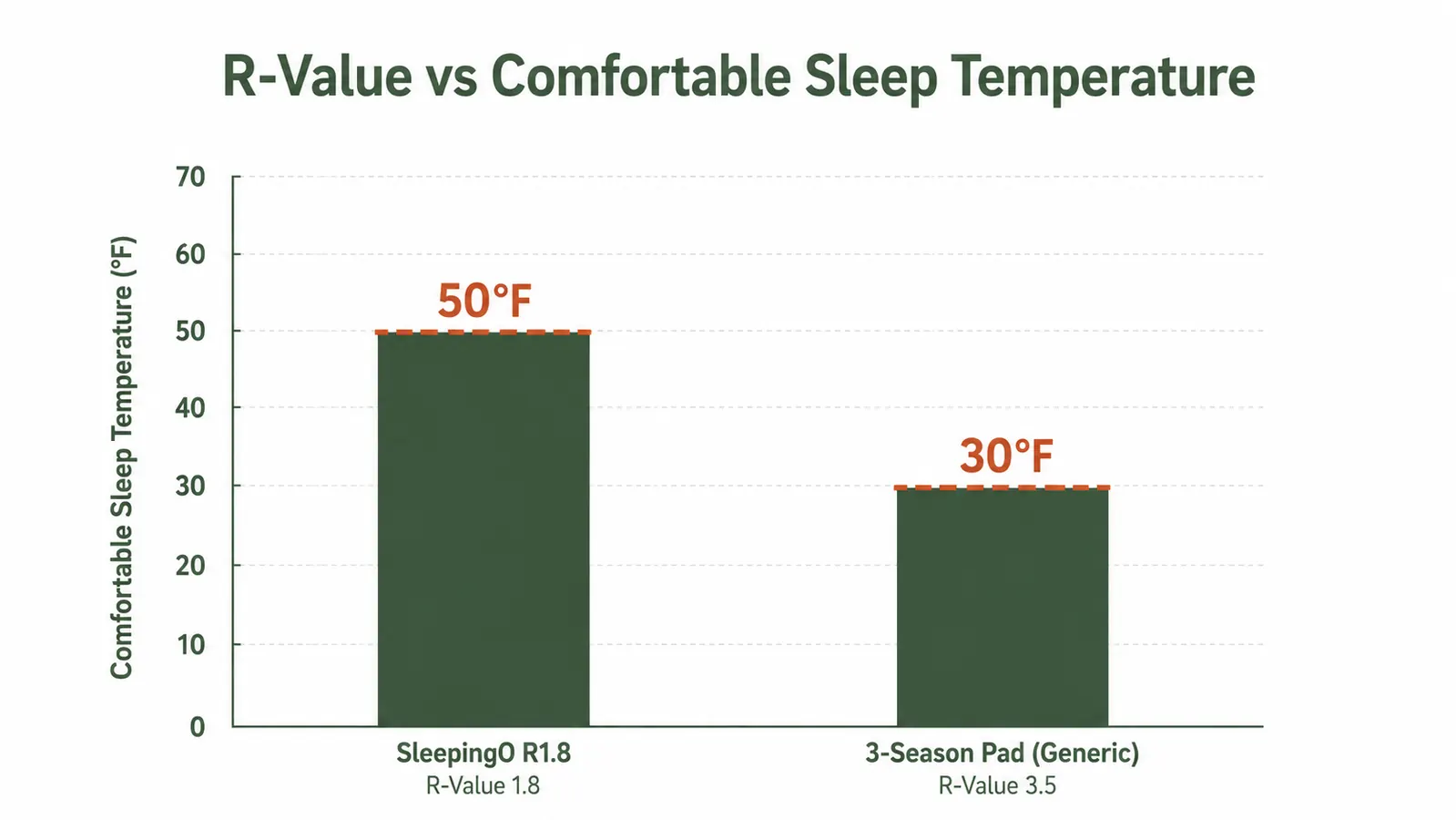
The Sleepingo pad has an R-value of approximately 1.8. That number represents how much the pad resists heat transfer from your body to the ground below it. The higher the R-value, the warmer you stay. An R-value of 1.8 is appropriate for summer camping, which most listings define as ground temperatures above 50 degrees Fahrenheit. Below that threshold, conductive heat loss through the pad starts to outpace your sleeping bag's ability to keep you warm. Your bag rating assumes adequate insulation beneath you, not just above you. If the pad is letting heat drain into the earth, a 30-degree bag will not save you at 45 degrees.
On the September night I mentioned at the start, the ground temperature was 48 degrees. Two degrees below the pad's practical threshold. I was not in danger, but I was cold from the waist down for most of the night. My sleeping bag was rated to 30 degrees, so the bag was fine. The limiting factor was the pad, not the bag. If you are planning shoulder-season camping in any elevation above sea level, a pad with an R-value of at least 3.0 is worth the extra weight and cost. The Sleepingo is correctly marketed as a three-season pad, but in camping parlance, three season often means early spring through mid-fall, which can include nights in the low 40s depending on your location.
The Side-Sleeper Reality at 2.5 Inches of Loft
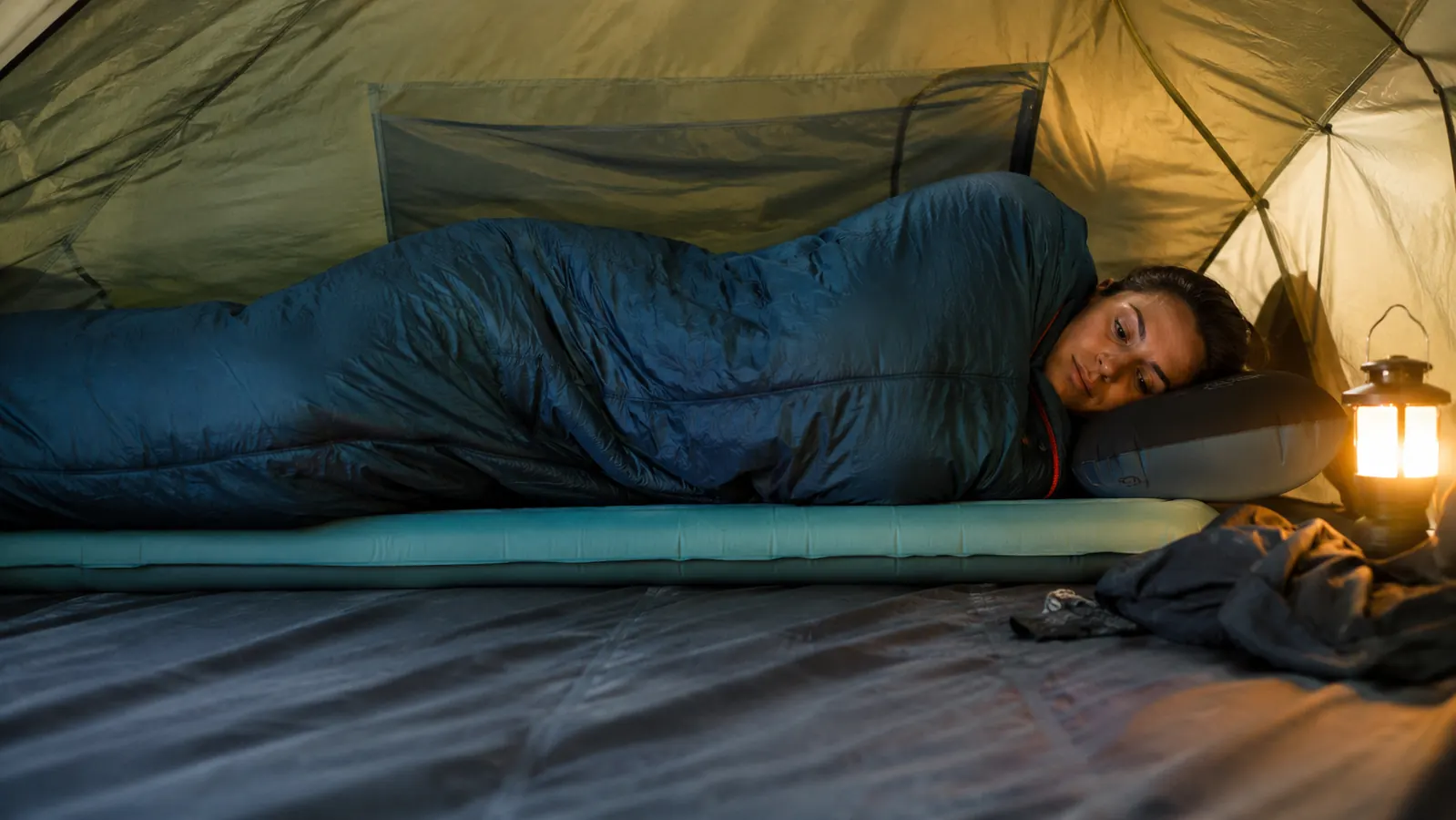
I am primarily a side sleeper. I have a standard adult frame, 5 feet 11 inches, 185 pounds, and on a fully inflated Sleepingo pad I feel the ground under my hip within about twenty minutes. The pad is rated to hold up to 242 pounds and it does not fail structurally for most people, but the cushioning at 2.5 inches of loft is genuinely thin for side sleepers who carry weight in their hips or shoulders. The pad deflects under point load. Your heaviest point of contact compresses the air bladder and you end up sleeping on less pad than you started with.
The fix most people land on is slight under-inflation. Counter-intuitive, but it works. If you inflate the pad to about 80 percent of maximum pressure, the bladder has room to distribute your body weight across a wider surface area instead of pushing straight down at the contact point. I now inflate the Sleepingo to what feels like a firm but not taut pressure, which for my weight takes about 22 to 25 breaths. That setup genuinely improves side-sleeper comfort. But it means you need to experiment on your first night to find the sweet spot, which is not ideal when you are trying to get to sleep at a campsite after a long drive.
The pad is not a dud. It is a specific tool with a specific job, and that job is warm-weather camping for back or stomach sleepers who want to pack light.
The Noise Issue: What Moving at Night Actually Sounds Like
The 20D nylon fabric on the Sleepingo pad is light and durable, but it is not quiet. Every time you roll over at night, the pad makes a noticeable crinkling or rustling sound. It is not as loud as old-school foam pads, but it is louder than self-inflating pads with softer fabric shells. If you are a restless sleeper sharing a tent with a light sleeper, this is a real consideration. The noise does not diminish much after the pad breaks in. I noticed it the same on trip six as I did on trip one.
This is a direct tradeoff for the weight savings. The 20D nylon is what keeps this pad under 14 ounces. Quieter fabrics are heavier. If you are car camping and noise does not matter, this is a non-issue. If you are tent camping with a partner who wakes easily, mention it before the trip. It is not a dealbreaker for most people but it is worth knowing before you hear it at midnight.
Pack Size: Honest Comparison to the Marketing Photos
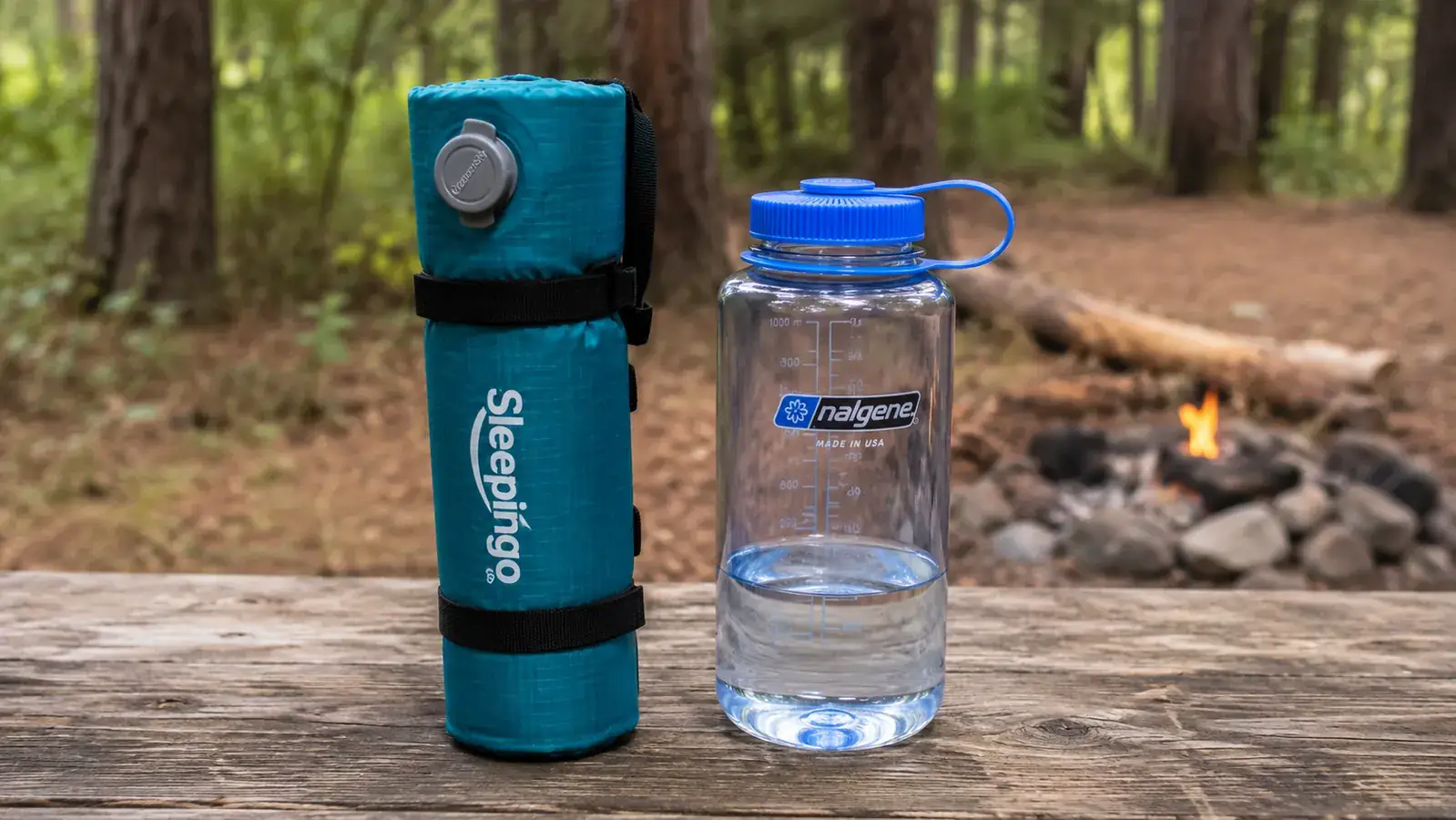
The listing shows the pad rolled into a compact cylinder that looks about the size of a 1-liter water bottle. That is accurate when the pad is rolled very tightly by an experienced hand with all air expelled. In practice, after a few trips when the material has some memory to it and you are packing camp in low light after a night of bad sleep, it rolls closer to the size of a 32-ounce wide-mouth Nalgene: larger diameter, similar height. Still genuinely compact for an inflatable sleeping pad. Not as compact as it looks in the hero photo.
The included stuff sack helps, but rolling the pad into the sack requires pushing excess air out first, and the sack is sized tight enough that a sloppy roll will not close the drawstring. If you are packing fast on a solo backpacking trip, budget a minute or two for pad storage. For car camping, this is a non-issue since you just toss it in the back of the truck. But if you are counting cubic inches in a 35-liter pack, the realistic compressed size matters and it is larger than the listing photo suggests. Measure your available space before ordering if you are trying to fit this into an already full pack.
What It Does Well That Justifies the Rating
None of what I have written above means this pad is a bad purchase. For what it costs, the Sleepingo does a lot right. The seam welds have held through repeated inflation and deflation cycles across gravel, sand, and root-laced ground without leaking. The fabric has not developed any pinholes on my pads despite real-use contact with rough surfaces. Deflation is fast, under two minutes to get it flat enough to start rolling, which matters when you are packing camp in the morning. The color options are bright enough to spot inside a tent without a headlamp, which is a small detail that adds up over many trips.
For back sleepers camping in warm weather, this pad genuinely works well. Back sleeping distributes body weight more evenly than side sleeping, so the 2.5-inch loft problem mostly goes away. On warm nights above 55 degrees, the R-value limitation does not come into play. If your camping profile fits those parameters, the Sleepingo earns its rating and then some at this price point. I have recommended it to three friends who are back sleepers doing summer car camping and all three have been satisfied with it after a full season.
What I Liked
- Lightweight enough for actual backpacking at under 14 ounces
- Seam welds have proven durable across rough terrain contact
- Fast deflation, under two minutes to get flat for packing
- Good customer service and warranty replacement experience
- Compact enough to fit inside a 35-liter pack with room left
- Works very well for back sleepers on warm-ground nights
Where It Falls Short
- Valve seal can weaken around trip 3 to 4 and hiss intermittently
- Real inflation time is closer to 25 to 30 breaths under field conditions
- R-value of 1.8 is too low for ground temps below 50 degrees
- Side sleepers over 160 pounds will feel the ground within 20 minutes at full inflation
- 20D nylon fabric makes audible noise on every overnight movement
- Pack size is larger in practice than the listing photos suggest
Who This Pad Is For
The Sleepingo Ultralight Sleeping Pad is the right buy if you are a back or stomach sleeper doing summer or early-fall camping in conditions where ground temperatures stay above 50 degrees. It is also a solid first sleeping pad for someone who has been sleeping on foam or nothing at all, because any inflatable is a meaningful upgrade from the ground. Backpackers who need to count ounces and are not camping in cold shoulder seasons will find this pad hits the weight and size targets without the premium price. Car campers who want something better than an air mattress but lighter than a foam roll will also be happy with it. The value per dollar is genuinely hard to beat for those use cases.
Who Should Skip It
If you are a dedicated side sleeper, look at the Therm-a-Rest NeoAir XLite or the Sea to Summit Ether Light XT, both of which offer more loft and better side-sleeper cushioning at a higher price. If you are doing fall or winter camping in elevations above 2,000 feet, get a pad with an R-value of at least 3.5. If you share a tent with a light sleeper, the fabric noise is going to be a problem regardless of how carefully you move. And if you are someone who has had bad luck with inflation valves on gear in general, the Sleepingo valve is not going to be the exception. For a deeper comparison of the Sleepingo against a step-up option, see our breakdown of the Sleepingo vs Therm-a-Rest ProLite. And if you want to build a full system around better camp sleep, the guide on how to sleep better when camping covers pad choice alongside positioning and layering.
Know your sleep style and your temps before you click buy.
The Sleepingo Ultralight Sleeping Pad is a strong value for the right camper. Check today's price on Amazon and look at the size options. The regular works for most adults under 6 feet; the large is worth it if you sleep tall or like your shoulders fully on the pad.
Amazon Check Today's Price on Amazon →